
- 0
- 1,327 word
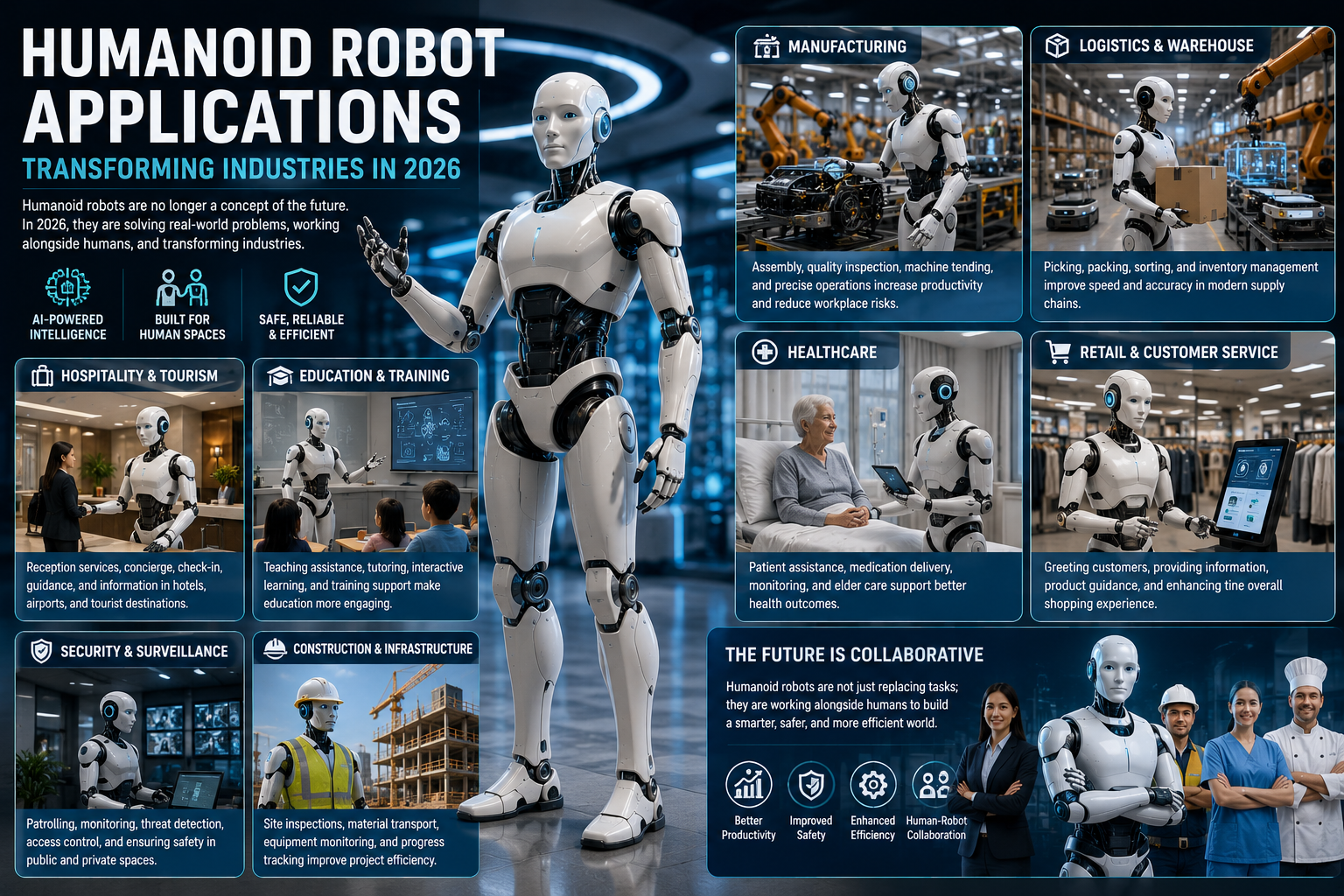
Humanoid Robot Applications Transforming Industries in 2026 – Humanoid robots have long been a symbol of the future, appearing in science fiction movies, technology exhibitions, and research laboratories. In 2026, however, humanoid robots are no longer just futuristic concepts. Thanks to rapid advancements in artificial intelligence, machine learning, computer vision, and robotics engineering, these human-like machines are becoming practical tools that are transforming industries around the world.
Humanoid robots are designed to resemble and interact with humans. They often feature two arms, two legs, cameras that function as eyes, microphones for hearing, and advanced AI systems that enable them to understand commands, recognize objects, and perform complex tasks. Their human-like design allows them to operate in environments originally built for people, making them highly versatile across a wide range of industries.
As businesses seek new ways to improve productivity, address labor shortages, and enhance customer experiences, humanoid robots are emerging as one of the most exciting technologies shaping the future of work.
What Are Humanoid Robots?
Humanoid robots are robots designed to mimic the structure and behavior of humans. Unlike traditional industrial robots that are fixed to production lines and perform repetitive tasks, humanoid robots can move through human environments and interact with people more naturally.
Modern humanoid robots combine several advanced technologies, including:
- Artificial Intelligence (AI)
- Machine Learning
- Computer Vision
- Natural Language Processing
- Sensor Fusion
- Robotics Engineering
These technologies allow humanoid robots to perceive their surroundings, make decisions, communicate with humans, and adapt to changing conditions.
Why Humanoid Robots Are Gaining Momentum
Several factors are accelerating the adoption of humanoid robots across industries.
Labor Shortages
Many countries are experiencing workforce shortages due to aging populations and changing labor market dynamics. Humanoid robots can help fill critical gaps in industries where finding workers is increasingly difficult.
Advances in AI
Modern AI systems have dramatically improved robot intelligence. Robots can now understand speech, recognize objects, navigate complex environments, and learn from experience.
Flexible Deployment
Unlike specialized machines, humanoid robots can perform multiple tasks within the same environment. This flexibility increases their value for businesses.
Increased Investment
Technology companies and investors are pouring billions of dollars into robotics development, accelerating innovation and commercial adoption.
Manufacturing and Industrial Operations
Manufacturing remains one of the most promising sectors for humanoid robot deployment.
Factories often require workers to perform repetitive, physically demanding tasks. Humanoid robots can handle many of these responsibilities while maintaining high levels of precision and consistency.
Applications include:
- Material handling
- Assembly operations
- Quality inspections
- Equipment monitoring
- Packaging and logistics support
Because Humanoid Robot Applications can navigate spaces designed for human workers, manufacturers can integrate them into existing facilities without completely redesigning workflows.
As automation technology improves, humanoid robots are expected to work alongside employees, helping increase productivity while reducing workplace injuries.
Warehouse and Logistics Operations
The global growth of e-commerce has created enormous demand for efficient logistics operations.
Humanoid robots are increasingly being used in warehouses to assist with:
- Picking and packing orders
- Transporting inventory
- Loading and unloading shipments
- Inventory management
- Facility inspections
Their ability to move through human-centered environments gives them an advantage in facilities that were not originally designed for traditional automation systems.
As supply chains become more complex, humanoid robots can help companies improve speed, accuracy, and operational efficiency.
Healthcare and Elderly Care
Healthcare is another industry where Humanoid Robot Applications are beginning to make a significant impact.
Hospitals and healthcare providers face growing challenges related to staffing shortages and increasing patient demands.
Humanoid Robot Applications can assist by:
- Delivering medications
- Guiding patients
- Monitoring vital signs
- Providing information
- Supporting administrative tasks
In elderly care settings, humanoid robots can provide companionship and assist with daily activities.
As populations age worldwide, robotic caregivers may become valuable tools for supporting independent living and improving quality of life.
Retail and Customer Service
Customer-facing industries are exploring Humanoid Robot Applications as a way to enhance service experiences.
Retail applications include:
- Greeting customers
- Providing product information
- Assisting with navigation
- Managing inventory checks
- Answering frequently asked questions
Humanoid robots can communicate naturally and engage customers in ways that traditional kiosks cannot.
Businesses view these Humanoid Robot Applications as an opportunity to improve customer experiences while reducing operational costs.
Hospitality and Tourism
Hotels, airports, and tourism businesses are experimenting with humanoid robots to improve guest services.
Common applications include:
- Hotel reception services
- Check-in assistance
- Concierge support
- Airport guidance
- Tourist information services
Humanoid robots can operate around the clock and communicate in multiple languages, making them valuable assets in international environments.
As AI language capabilities continue to improve, these robots are becoming increasingly effective at handling customer interactions.
Education and Training Humanoid Robot Applications
Educational institutions are finding innovative ways to use humanoid robots in classrooms and training programs.
Robots can:
- Assist teachers
- Provide tutoring support
- Demonstrate technical concepts
- Teach programming and robotics
- Support students with special learning needs
Interactive humanoid robots can make learning more engaging and personalized.
In professional training environments, robots can also simulate real-world scenarios and provide hands-on learning experiences.
Security and Surveillance
Humanoid robots are beginning to play a role in security operations.
Potential applications include:
- Facility patrols
- Visitor management
- Threat detection
- Emergency response support
- Access control monitoring
Equipped with cameras, sensors, and AI analytics, humanoid robots can help organizations enhance safety while reducing routine security workloads.
Although human oversight remains essential, robotic security assistants can significantly improve operational efficiency.
Construction and Infrastructure
The construction industry faces ongoing challenges related to labor shortages, safety risks, and project delays.
Humanoid robots may help by performing tasks such as:
- Site inspections
- Material transportation
- Equipment monitoring
- Hazard identification
- Progress tracking
Future robots may also assist with physically demanding construction activities, reducing strain on human workers and improving workplace safety.
The Role of AI in Humanoid Robotics
Artificial intelligence is the driving force behind modern humanoid robots.
AI enables robots to:
- Understand spoken language
- Recognize objects and people
- Navigate complex environments
- Make autonomous decisions
- Learn from experience
Recent advances in multimodal AI allow robots to process multiple types of information simultaneously, including text, images, audio, and sensor data.
This creates more intelligent and adaptable systems capable of operating in dynamic real-world environments.
As AI continues to improve, humanoid robots will become increasingly capable of performing sophisticated tasks independently.
Challenges Facing Humanoid Robot Adoption
Despite rapid progress, several challenges remain.
High Development Costs
Humanoid robots are among the most complex machines ever built. Development and deployment costs remain significant.
Technical Limitations
Robots still struggle with some tasks that humans perform effortlessly, such as handling unexpected situations or navigating highly cluttered environments.
Safety Concerns
Ensuring safe interaction between robots and humans remains a critical priority.
Manufacturers must develop robust safety systems and testing procedures.
Ethical and Workforce Considerations
The growing use of robots raises important questions about employment, privacy, and the future role of human workers.
Organizations must balance automation benefits with workforce development and responsible technology adoption.
The Future of Humanoid Robot Applications
The future of humanoid robots looks increasingly promising.
Several trends are expected to accelerate adoption:
- More affordable robotic hardware
- Advanced AI reasoning capabilities
- Improved battery technology
- Better mobility and dexterity
- Enhanced human-robot collaboration
- Expansion into new industries
Experts predict that humanoid robots will become common in workplaces, public spaces, and even homes over the next decade.
Rather than replacing humans entirely, these robots are likely to serve as intelligent assistants that complement human skills and productivity.
Conclusion
Humanoid robot applications are transforming industries in 2026 by bringing advanced automation into environments designed for people. From manufacturing and logistics to healthcare, education, hospitality, and retail, these intelligent machines are helping organizations improve efficiency, address labor shortages, and enhance customer experiences.
Powered by breakthroughs in artificial intelligence, computer vision, and robotics, humanoid robots are becoming more capable and practical each year. While challenges related to cost, safety, and workforce adaptation remain, the momentum behind humanoid robotics continues to grow.
As technology advances, humanoid robots are poised to become one of the most influential innovations of the modern era, reshaping industries and redefining the future of work worldwide.
Author

96livemarketing@gmail.com
Related Posts
How Digital Twin Robotics Is Improving Real World Automation
- 0
- 1,591 word
How Digital Twin Robotics Is Improving Real World Automation – The rapid advancement of robotics and artificial intelligence is transforming industries around the...
Read out all
Robot Learning and the Next Generation of Intelligent Machines
- 0
- 1,597 word
Robot Learning and the Next Generation of Intelligent Machines – Robotics has evolved dramatically over the past few decades. Early robots were designed...
Read out all
How Surgical Robots Are Transforming Modern Healthcare
- 0
- 1,495 word
How Surgical Robots Are Transforming Modern Healthcare – Healthcare has experienced remarkable technological advancements over the past few decades, and one of...
Read out all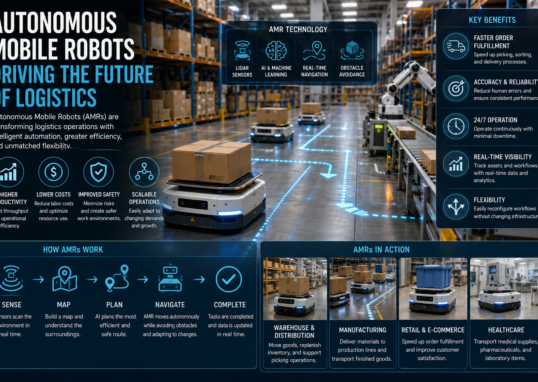
Autonomous Mobile Robots Driving the Future of Logistics
- 0
- 1,458 word
Autonomous Mobile Robots Driving the Future of Logistics – The logistics industry is experiencing a major technological transformation. As global commerce expands and...
Read out all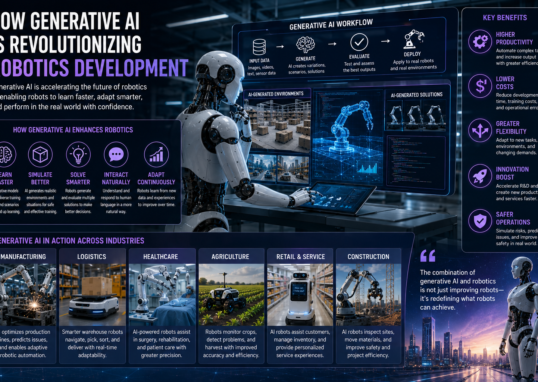
Generative AI for Robotics and the Future of Intelligent Machines
- 0
- 1,425 word
How Generative AI Is Revolutionizing Robotics Development – Artificial intelligence has already transformed countless industries, but one of the most exciting developments...
Read out all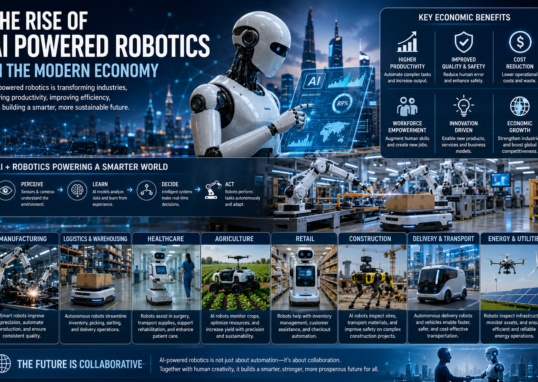
The Rise of AI Powered Robotics in the Modern Economy
- 0
- 1,510 word
The Rise of AI Powered Robotics in the Modern Economy – Artificial intelligence and robotics are two of the most transformative technologies of...
Read out all