
- 0
- 1,458 word
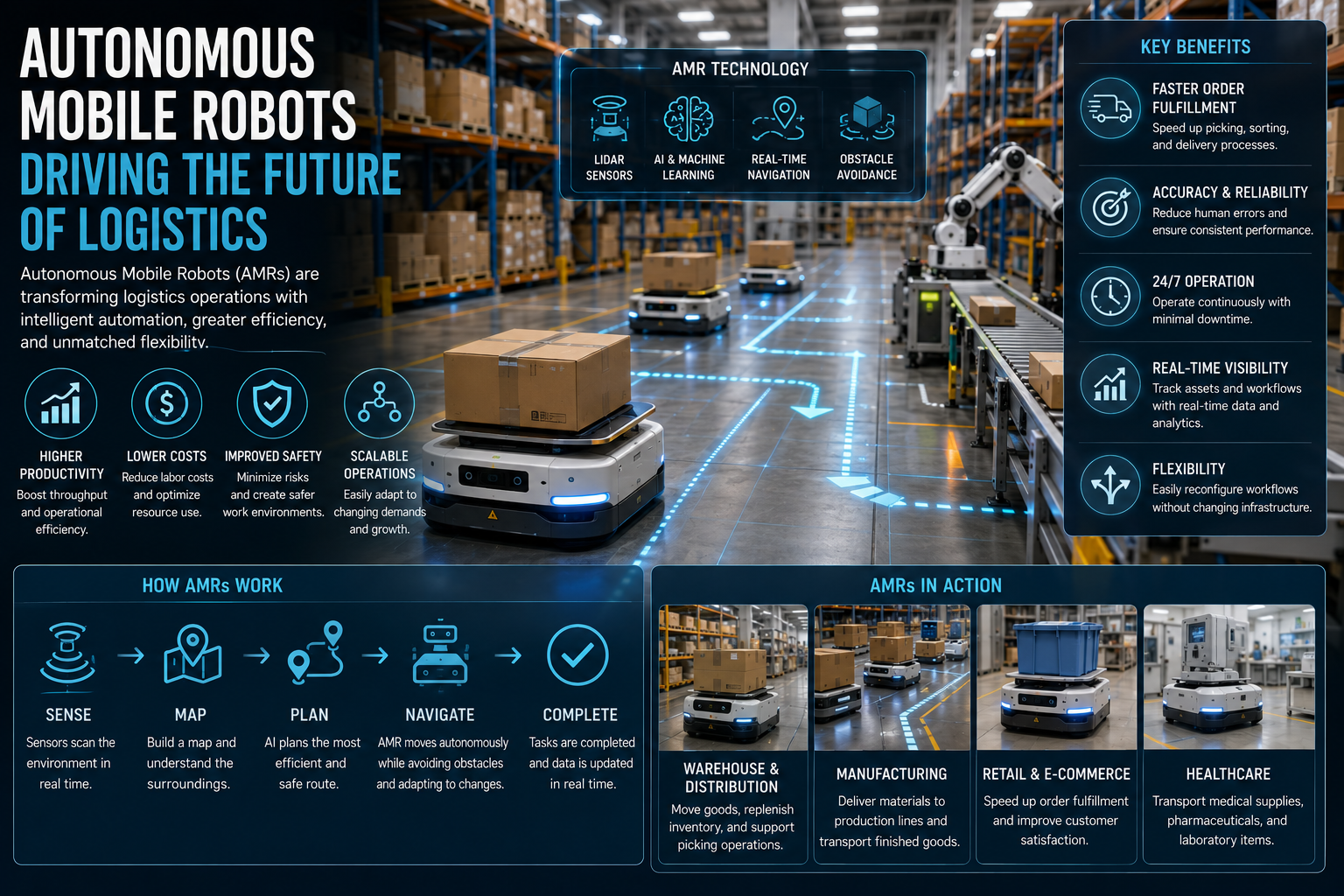
Autonomous Mobile Robots Driving the Future of Logistics – The logistics industry is experiencing a major technological transformation. As global commerce expands and consumer expectations continue to rise, companies face increasing pressure to deliver products faster, more accurately, and at lower costs. Traditional logistics operations often struggle to keep pace with growing demand, labor shortages, and complex supply chain requirements.
One of the most significant innovations helping organizations address these challenges is the adoption of Autonomous Mobile Robots (AMRs). These intelligent machines are revolutionizing warehouses, distribution centers, manufacturing facilities, and fulfillment operations by automating material movement and streamlining logistics workflows.
Unlike traditional automated systems that rely on fixed infrastructure or predefined routes, Autonomous Mobile Robots can navigate dynamic environments independently. Powered by artificial intelligence, sensors, machine learning, and advanced navigation technologies, AMRs are becoming a cornerstone of modern logistics operations.
As businesses seek greater efficiency and flexibility, Autonomous Mobile Robots are playing an increasingly important role in shaping the future of global supply chains.
What Are Autonomous Mobile Robots
Autonomous Mobile Robots are self-navigating robotic systems capable of moving through environments without continuous human control.
Unlike Automated Guided Vehicles (AGVs), which typically follow fixed paths using magnetic strips or predefined routes, AMRs can dynamically navigate and adapt to changing conditions.
These robots use a combination of technologies including:
- Artificial Intelligence
- Machine Learning
- Computer Vision
- LiDAR Sensors
- Cameras
- GPS and Mapping Systems
- Real-Time Data Processing
By continuously analyzing their surroundings, AMRs can make decisions, avoid obstacles, and optimize travel routes while performing tasks autonomously.
Why Logistics Needs Autonomous Mobile Robots
Modern logistics networks are becoming increasingly complex.
Several factors are driving demand for AMR solutions.
Growing E-Commerce Demand
Online shopping continues to expand globally.
Consumers expect:
- Faster shipping
- Same-day delivery
- Real-time tracking
- High order accuracy
Meeting these expectations requires highly efficient fulfillment operations.
Labor Shortages
Warehouses and distribution centers frequently face workforce shortages.
Many logistics roles involve repetitive and physically demanding tasks that can be difficult to staff consistently.
AMRs help organizations maintain productivity despite labor challenges.
Rising Operational Costs
Businesses constantly seek ways to reduce expenses while improving service quality.
Automation enables greater efficiency and better resource utilization.
Supply Chain Complexity
Global supply chains involve numerous moving parts.
AMRs improve visibility, coordination, and operational agility throughout logistics networks.
How Autonomous Mobile Robots Work
AMRs rely on sophisticated hardware and software systems to operate independently.
Environmental Mapping
AMRs create digital maps of their surroundings using sensors and cameras.
These maps help robots understand the environment and identify optimal routes.
Navigation Systems
Navigation technologies allow robots to:
- Locate themselves
- Plan routes
- Avoid obstacles
- Adapt to changes
This capability enables operation in dynamic environments with people, equipment, and other robots.
Real-Time Decision Making
Artificial intelligence continuously analyzes incoming data.
The robot evaluates conditions and adjusts behavior accordingly.
Fleet Coordination
Many logistics facilities deploy multiple AMRs simultaneously.
Fleet management software coordinates robot activities to maximize efficiency and avoid congestion.
Autonomous Mobile Robots in Warehousing
Warehouses represent one of the largest applications for AMRs.
Material Transport
AMRs move inventory throughout facilities, reducing the need for manual transportation.
Tasks include:
- Transporting pallets
- Moving containers
- Delivering materials
- Replenishing inventory
Order Picking Support
Robots assist workers by bringing products directly to picking stations.
This reduces walking time and improves productivity.
Inventory Management
AMRs equipped with scanning technologies can monitor inventory levels and track product locations.
This improves stock accuracy and operational visibility.
Sorting Operations
Robots help sort packages and prepare orders for shipment.
Automated sorting improves speed and reduces errors.
Improving Fulfillment Center Efficiency
Modern fulfillment centers process thousands of orders daily.
AMRs help optimize key workflows.
Faster Order Processing
Robots reduce travel times within facilities, enabling faster order fulfillment.
Increased Throughput
Facilities can handle higher order volumes without significantly increasing labor requirements.
Reduced Errors
Automation improves consistency and accuracy throughout fulfillment operations.
Flexible Operations
AMRs can be redeployed easily as operational needs change.
This flexibility supports seasonal demand fluctuations and business growth.
Enhancing Workplace Safety
Safety remains a major concern in logistics operations.
Autonomous Mobile Robots contribute to safer working environments.
Collision Avoidance
Advanced sensors help robots detect and avoid:
- People
- Equipment
- Obstacles
- Vehicles
Reduced Manual Handling
AMRs transport heavy loads that would otherwise require manual lifting.
This lowers the risk of workplace injuries.
Improved Traffic Management
Fleet coordination systems optimize movement patterns and reduce congestion.
This creates safer warehouse environments.
Autonomous Mobile Robots in Manufacturing Logistics
Manufacturing facilities increasingly rely on AMRs to support production operations.
Material Delivery
Robots transport components and raw materials to production lines.
Work-In-Progress Movement
AMRs move partially completed products between manufacturing stages.
Just-In-Time Manufacturing
Autonomous transportation supports lean manufacturing strategies by ensuring materials arrive exactly when needed.
Production Flexibility
Manufacturers can reconfigure workflows without modifying fixed transportation infrastructure.
This improves agility and responsiveness.
Artificial Intelligence Powering AMRs
Artificial intelligence is the foundation of modern Autonomous Mobile Robots.
Route Optimization
AI identifies the most efficient travel paths based on current conditions.
Predictive Analytics
AMRs use data analysis to anticipate operational needs and optimize performance.
Machine Learning
Robots continuously improve their efficiency through experience.
Adaptive Behavior
AI enables robots to respond intelligently to unexpected situations.
This flexibility distinguishes AMRs from traditional automation systems.
Economic Benefits of Autonomous Mobile Robots
Organizations investing in AMRs often realize substantial economic advantages.
Increased Productivity
Robots can operate continuously with minimal downtime.
Lower Labor Costs
Automation reduces reliance on manual transportation tasks.
Improved Resource Utilization
AMRs optimize workflows and reduce wasted time.
Faster Return on Investment
Many organizations achieve significant operational savings after deployment.
Scalability
Businesses can add robots as operational demands increase.
This supports long-term growth without major infrastructure changes.
Autonomous Mobile Robots and Supply Chain Resilience
Recent global disruptions have highlighted the importance of resilient supply chains.
AMRs help organizations adapt to changing conditions.
Operational Continuity
Automated systems maintain productivity during labor shortages and disruptions.
Greater Flexibility
AMRs can quickly adjust to new workflows and operational requirements.
Improved Visibility
Data collected by robots provides valuable operational insights.
Faster Response Times
Organizations can respond more effectively to changes in demand and market conditions.
Emerging Applications Beyond Warehousing
The use of Autonomous Mobile Robots is expanding beyond traditional logistics environments.
Healthcare Facilities
Hospitals use AMRs to transport:
- Medications
- Medical supplies
- Laboratory samples
- Equipment
Airports
Robots assist with baggage handling and transportation tasks.
Retail Distribution
Retailers use AMRs to improve inventory movement and fulfillment operations.
Food and Beverage Facilities
AMRs support production, storage, and distribution processes.
These applications demonstrate the versatility of autonomous robotics technology.
Challenges Facing AMR Adoption
Despite their benefits, Autonomous Mobile Robots face several implementation challenges.
Initial Investment Costs
Deploying robotic systems requires upfront expenditures on hardware, software, and integration.
Infrastructure Integration
Organizations must ensure compatibility with existing systems and workflows.
Cybersecurity Risks
Connected robots can become targets for cyberattacks if security measures are insufficient.
Workforce Adaptation
Employees require training to work effectively alongside autonomous systems.
Maintenance Requirements
Regular maintenance is necessary to ensure reliable performance.
Organizations must plan for ongoing support and system management.
Future Trends in Autonomous Mobile Robots
Several trends are expected to shape the future of AMR technology.
More Advanced Artificial Intelligence
Future robots will possess stronger reasoning, planning, and decision-making capabilities.
Human Robot Collaboration
AMRs will increasingly work alongside human employees in collaborative environments.
Swarm Robotics
Groups of robots will coordinate activities collectively to improve efficiency.
Digital Twin Integration
Virtual models will help organizations simulate and optimize robotic operations.
Greater Autonomy
Future systems will require less human supervision while handling increasingly complex tasks.
Expanded Industry Adoption
AMRs are expected to become common across healthcare, retail, manufacturing, transportation, and service industries.
Sustainability Benefits
Sustainability is becoming a key priority for logistics organizations.
Autonomous Mobile Robots contribute to environmental goals through:
- Optimized travel routes
- Reduced energy consumption
- Improved resource efficiency
- Lower operational waste
Many AMRs also use energy-efficient battery systems designed for long-term sustainability.
As businesses pursue greener supply chains, robotics will play an important role in reducing environmental impact.
Conclusion
Autonomous Mobile Robots are driving the future of logistics by transforming how goods, materials, and inventory move throughout supply chains. Powered by artificial intelligence, machine learning, sensors, and advanced navigation systems, these intelligent robots offer unprecedented levels of flexibility, efficiency, and scalability.
From warehouses and fulfillment centers to manufacturing facilities and healthcare environments, AMRs are helping organizations improve productivity, reduce costs, enhance safety, and build more resilient operations. As e-commerce continues to grow and supply chains become increasingly complex, the demand for intelligent automation solutions will only accelerate.
Although challenges related to cost, integration, and workforce adaptation remain, the benefits of Autonomous Mobile Robots are driving rapid adoption worldwide. As technology advances, AMRs will become even more capable, helping organizations create smarter, faster, and more sustainable logistics networks for the future.
This content is sponsored by: https://ez96official.com/.
Author

96livemarketing@gmail.com
Related Posts
How Digital Twin Robotics Is Improving Real World Automation
- 0
- 1,591 word
How Digital Twin Robotics Is Improving Real World Automation – The rapid advancement of robotics and artificial intelligence is transforming industries around the...
Read out all
Robot Learning and the Next Generation of Intelligent Machines
- 0
- 1,597 word
Robot Learning and the Next Generation of Intelligent Machines – Robotics has evolved dramatically over the past few decades. Early robots were designed...
Read out all
How Surgical Robots Are Transforming Modern Healthcare
- 0
- 1,495 word
How Surgical Robots Are Transforming Modern Healthcare – Healthcare has experienced remarkable technological advancements over the past few decades, and one of...
Read out all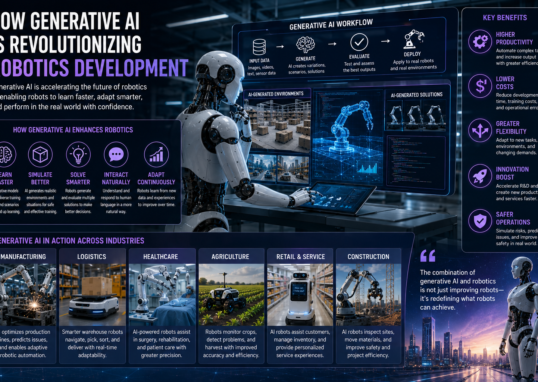
Generative AI for Robotics and the Future of Intelligent Machines
- 0
- 1,425 word
How Generative AI Is Revolutionizing Robotics Development – Artificial intelligence has already transformed countless industries, but one of the most exciting developments...
Read out all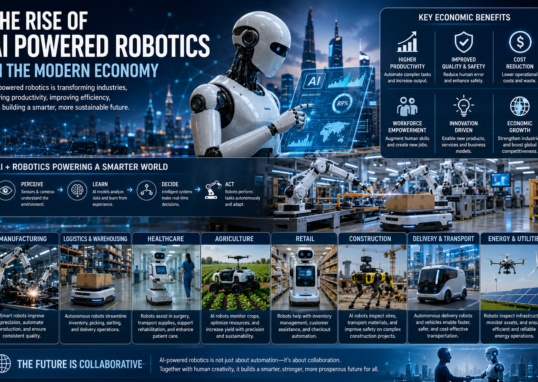
The Rise of AI Powered Robotics in the Modern Economy
- 0
- 1,510 word
The Rise of AI Powered Robotics in the Modern Economy – Artificial intelligence and robotics are two of the most transformative technologies of...
Read out all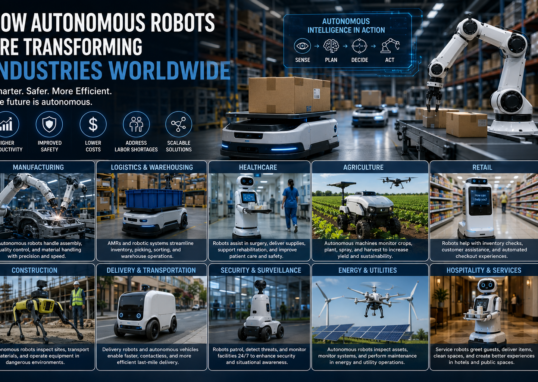
How Autonomous Robots Are Transforming Industries Worldwide
- 0
- 1,304 word
How Autonomous Robots Are Transforming Industries Worldwide – Autonomous robots are rapidly becoming one of the most influential technologies of the modern era....
Read out all