- 0
- 1,591 word
How Digital Twin Robotics Is Improving Real World Automation – The rapid advancement of robotics and artificial intelligence is transforming industries around the world. From manufacturing and logistics to healthcare and smart cities, organizations are increasingly relying on automation to improve efficiency, productivity, and decision-making. However, deploying robotic systems in real-world environments can be expensive, time-consuming, and complex. Testing new processes, training robots, and predicting system performance often involve significant risks and operational challenges.
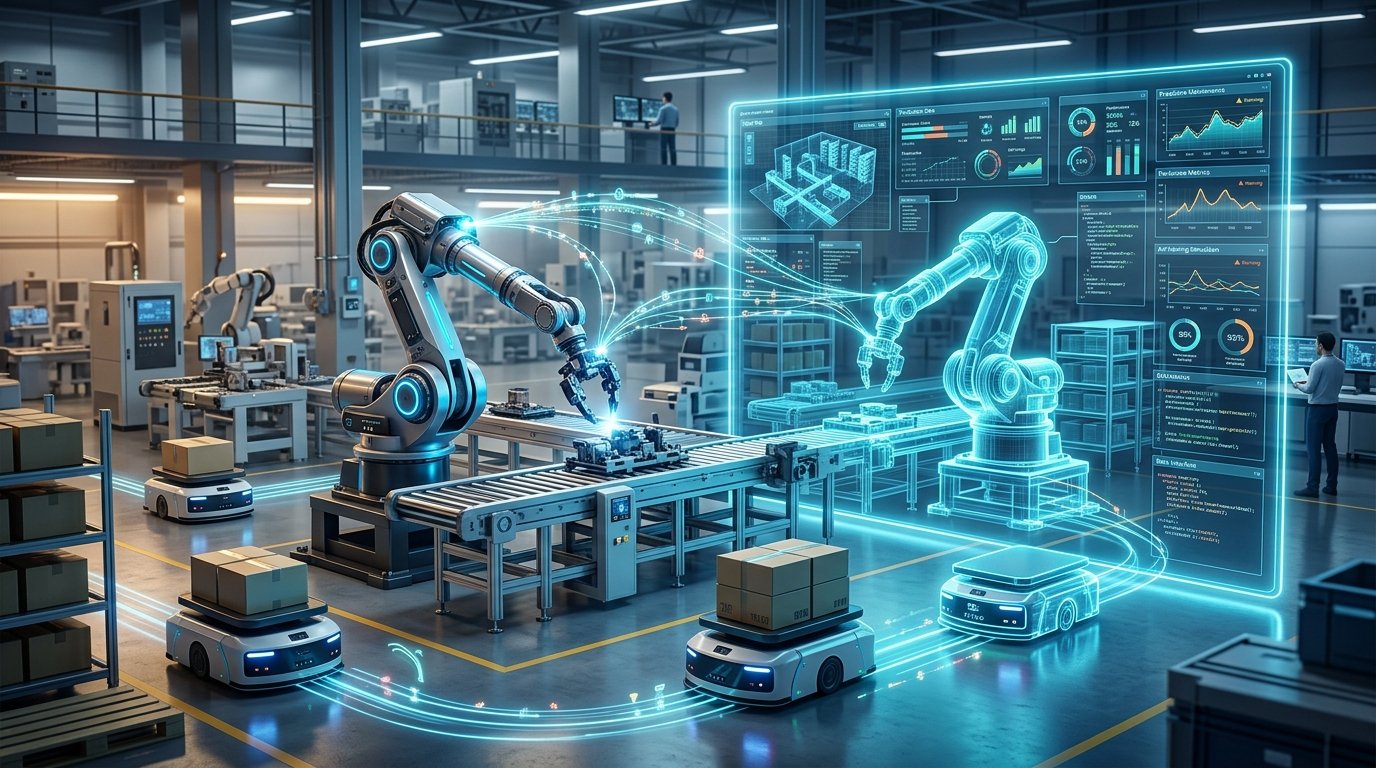
To address these issues, companies are turning to Digital Twin Robotics, one of the most innovative technologies driving the future of automation. By creating virtual replicas of physical robots, machines, facilities, and processes, digital twins allow organizations to simulate, analyze, and optimize robotic operations before implementing changes in the real world.
In 2026, Digital Twin Robotics is becoming a critical tool for businesses seeking to improve automation, reduce costs, enhance productivity, and accelerate innovation. As artificial intelligence, cloud computing, and industrial IoT technologies continue to evolve, digital twins are helping bridge the gap between virtual models and physical robotic systems.
What Is Digital Twin Robotics?
Digital Twin Robotics refers to the use of digital twin technology to create virtual representations of robotic systems and their operating environments.
A digital twin is a dynamic virtual model that mirrors a physical object, machine, process, or system in real time.
In robotics, digital twins can represent:
- Individual robots
- Robotic arms
- Autonomous mobile robots
- Manufacturing equipment
- Warehouse systems
- Entire production facilities
These virtual models continuously receive data from real-world sensors, allowing them to reflect current conditions and behaviors accurately.
The digital twin becomes a powerful tool for monitoring, simulation, analysis, and optimization.
Understanding the Digital Twin Concept
The concept of digital twins originated in engineering and manufacturing industries.
The basic idea is simple:
A physical system exists in the real world.
A corresponding digital version exists in a virtual environment.
Data continuously flows between the physical and digital systems.
This connection allows organizations to:
- Monitor performance
- Predict outcomes
- Test scenarios
- Improve operations
For robotics, digital twins provide a safe and efficient environment where systems can be studied and optimized before real-world deployment.
Why Digital Twin Robotics Is Growing in Importance
Several factors are driving the rapid adoption of Digital Twin Robotics.
Increasing Automation Complexity
Modern robotic systems are becoming more sophisticated.
Organizations often manage:
- Multiple robots
- Automated workflows
- AI-driven processes
- Connected devices
Digital twins help manage this complexity more effectively.
Demand for Faster Innovation
Companies need to introduce new automation solutions quickly.
Digital twins accelerate development and testing cycles.
Cost Reduction
Testing physical systems repeatedly can be expensive.
Virtual simulations reduce costs while minimizing operational disruptions.
Improved Decision-Making
Digital twins provide valuable insights that support better strategic and operational decisions.
How Digital Twin Robotics Works
Digital Twin Robotics combines several advanced technologies.
Sensors and Data Collection
Physical robots are equipped with sensors that capture information such as:
- Position
- Speed
- Temperature
- Energy usage
- Operational status
Real-Time Data Transmission
Data is transmitted to the digital twin through industrial networks and cloud platforms.
Virtual Modeling
The digital twin replicates the physical robot’s characteristics and behavior.
Simulation and Analysis
Engineers can run simulations, test modifications, and analyze performance in the virtual environment.
Continuous Synchronization
The digital twin continuously updates as conditions change in the physical world.
This real-time connection is what makes digital twins so powerful.
Improving Robot Training Through Simulation
One of the most important applications of Digital Twin Robotics is robot training.
Virtual Learning Environments
Robots can practice tasks within simulated environments before operating in real-world settings.
Examples include:
- Warehouse navigation
- Product assembly
- Material handling
- Inspection procedures
Faster Development Cycles
Developers can train robots without disrupting production operations.
Safer Testing
Potential problems can be identified before robots interact with people or equipment.
Reduced Costs
Simulation eliminates many expenses associated with physical testing.
This approach has become particularly valuable for AI-powered robotic systems.
Digital Twin Robotics and Artificial Intelligence
Artificial intelligence and digital twins complement each other effectively.
AI Model Training
Digital twins provide realistic environments where AI systems can learn and improve.
Predictive Analytics
Machine learning algorithms analyze data from digital twins to identify trends and predict future outcomes.
Optimization
AI helps identify opportunities to improve efficiency and performance.
Autonomous Decision Making
Advanced systems may use insights from digital twins to support real-time robotic decisions.
The combination of AI and digital twins is accelerating the development of smarter automation systems.
Enhancing Manufacturing Automation
Manufacturing remains one of the largest adopters of Digital Twin Robotics.
Production Line Optimization
Digital twins help manufacturers identify bottlenecks and improve workflow efficiency.
Robotic Assembly Simulation
Engineers can test robotic assembly processes before implementation.
Quality Control Improvements
Virtual testing helps identify issues that could affect product quality.
Flexible Manufacturing
Digital twins support rapid reconfiguration of production systems to accommodate changing market demands.
These capabilities help manufacturers improve productivity while reducing operational risks.
Digital Twin Robotics in Warehousing and Logistics
Warehouses are becoming increasingly automated.
Digital twins support logistics operations in several ways.
Route Optimization
Autonomous mobile robots can test navigation strategies in virtual environments.
Warehouse Layout Design
Organizations can evaluate different facility configurations before making physical changes.
Fleet Management
Digital twins help coordinate multiple robots working simultaneously.
Inventory Flow Analysis
Simulation tools improve understanding of material movement throughout facilities.
As e-commerce continues growing, these capabilities are becoming increasingly valuable.
Predictive Maintenance and Reliability
Equipment failures can disrupt operations and increase costs.
Digital Twin Robotics supports predictive maintenance strategies.
Monitoring Equipment Health
Digital twins continuously track performance metrics.
Early Problem Detection
Machine learning algorithms identify warning signs before failures occur.
Maintenance Scheduling
Organizations can plan maintenance activities more effectively.
Reduced Downtime
Predictive maintenance minimizes unexpected interruptions.
Improved reliability is one of the most significant benefits of digital twin technology.
Supporting Human Robot Collaboration
Many workplaces now involve collaboration between humans and robots.
Digital twins help improve these interactions.
Safety Analysis
Virtual environments allow organizations to evaluate potential safety risks.
Workflow Design
Companies can optimize collaboration processes before deployment.
Employee Training
Workers can learn how to interact with robotic systems through simulation.
Performance Evaluation
Organizations can assess the effectiveness of human-robot teams.
These capabilities contribute to safer and more productive workplaces.
Digital Twin Robotics in Healthcare
Healthcare organizations are beginning to adopt digital twin technologies for robotic systems.
Surgical Robotics
Digital twins help surgeons plan procedures and evaluate robotic performance.
Medical Equipment Management
Healthcare facilities can monitor robotic systems more effectively.
Training Simulations
Medical professionals can practice procedures in realistic virtual environments.
Personalized Treatment Planning
Future applications may use digital twins to support customized healthcare solutions.
The healthcare sector is expected to become an increasingly important area for digital twin adoption.
Smart Cities and Infrastructure Applications
Digital Twin Robotics is expanding beyond industrial environments.
Infrastructure Inspection
Autonomous robots can inspect bridges, roads, and utility systems.
Urban Planning
Cities can simulate infrastructure projects before implementation.
Emergency Response
Digital twins support planning and coordination during emergencies.
Public Transportation
Robotic systems help improve transportation efficiency and reliability.
These applications demonstrate the versatility of digital twin technologies.
Economic Benefits of Digital Twin Robotics
Organizations often achieve substantial financial benefits through digital twin adoption.
Reduced Development Costs
Virtual testing minimizes the need for expensive physical prototypes.
Improved Productivity
Optimized robotic operations increase efficiency.
Faster Innovation
Companies can introduce new automation solutions more quickly.
Better Resource Utilization
Digital twins help organizations maximize the value of existing assets.
Lower Operational Risks
Simulation reduces the likelihood of costly mistakes.
These advantages make Digital Twin Robotics an attractive investment across industries.
Challenges Facing Digital Twin Robotics
Despite its benefits, Digital Twin Robotics faces several challenges.
Data Quality Requirements
Accurate digital twins depend on high-quality data.
Integration Complexity
Organizations must connect multiple systems, sensors, and platforms.
Cybersecurity Risks
Connected systems may become targets for cyberattacks.
Infrastructure Costs
Implementing digital twin platforms requires investment in technology and expertise.
Skill Gaps
Organizations need professionals with expertise in robotics, AI, simulation, and data analytics.
Addressing these challenges is essential for successful adoption.
Future Trends in Digital Twin Robotics
Several developments are expected to shape the future of this technology.
More Advanced AI Integration
Artificial intelligence will enhance simulation accuracy and decision-making capabilities.
Real-Time Autonomous Optimization
Future systems may automatically adjust robotic operations based on digital twin insights.
Larger Scale Simulations
Organizations will model entire factories, supply chains, and cities.
Improved Cloud Connectivity
Cloud computing will enable greater scalability and collaboration.
Greater Industry Adoption
Digital twins are expected to expand across manufacturing, healthcare, logistics, energy, transportation, and construction.
These trends will further strengthen the role of digital twins in modern automation.
Digital Twin Robotics and Sustainability
Sustainability is becoming an important business priority.
Digital twins contribute to environmental goals through:
- Reduced waste
- Improved energy efficiency
- Better resource utilization
- Optimized production processes
By improving operational efficiency, digital twin technologies support both economic and environmental objectives.
Conclusion
Digital Twin Robotics is transforming real-world automation by creating intelligent virtual replicas of robotic systems and their environments. Through real-time monitoring, simulation, predictive analytics, and AI-powered optimization, digital twins enable organizations to improve performance, reduce costs, accelerate innovation, and minimize operational risks.
From manufacturing and logistics to healthcare and smart cities, Digital Twin Robotics is helping organizations build smarter, more efficient, and more resilient automation systems. As artificial intelligence, cloud computing, industrial IoT, and robotics continue to advance, digital twins will become an increasingly important foundation for next-generation automation.
The ability to test, optimize, and predict outcomes in virtual environments before making real-world changes offers tremendous advantages. As a result, Digital Twin Robotics is poised to play a central role in shaping the future of intelligent automation across industries worldwide.
Author

96livemarketing@gmail.com
Related Posts
Robot Learning and the Next Generation of Intelligent Machines
- 0
- 1,597 word
Robot Learning and the Next Generation of Intelligent Machines – Robotics has evolved dramatically over the past few decades. Early robots were designed...
Read out all
How Surgical Robots Are Transforming Modern Healthcare
- 0
- 1,495 word
How Surgical Robots Are Transforming Modern Healthcare – Healthcare has experienced remarkable technological advancements over the past few decades, and one of...
Read out all
Autonomous Mobile Robots Driving the Future of Logistics
- 0
- 1,458 word
Autonomous Mobile Robots Driving the Future of Logistics – The logistics industry is experiencing a major technological transformation. As global commerce expands and...
Read out all
Generative AI for Robotics and the Future of Intelligent Machines
- 0
- 1,425 word
How Generative AI Is Revolutionizing Robotics Development – Artificial intelligence has already transformed countless industries, but one of the most exciting developments...
Read out all
The Rise of AI Powered Robotics in the Modern Economy
- 0
- 1,510 word
The Rise of AI Powered Robotics in the Modern Economy – Artificial intelligence and robotics are two of the most transformative technologies of...
Read out all
How Autonomous Robots Are Transforming Industries Worldwide
- 0
- 1,304 word
How Autonomous Robots Are Transforming Industries Worldwide – Autonomous robots are rapidly becoming one of the most influential technologies of the modern era....
Read out all