
- 0
- 1,152 word
The Role of AI Navigation in Autonomous Robotics
Artificial intelligence (AI) has become a pivotal component in enhancing the navigational capabilities of autonomous robots, particularly within the domains of warehouses, logistics, and manufacturing. The integration of AI in robotics facilitates improved autonomy, allowing for more efficient operations in complex environments that require a high level of adaptability and precision.
One of the primary advancements in AI navigation involves the use of computer vision. This technology enables robots to interpret visual data from their surroundings, allowing them to identify objects, recognize pathways, and detect obstacles in real-time. By employing advanced algorithms, machines can continuously learn from their environment, improving their navigational accuracy over time. Additionally, the fusion of various sensors—such as LiDAR and ultrasonic sensors—helps in creating comprehensive maps of the operational space. This multidimensional understanding empowers robots to navigate dynamic environments effectively, adjusting their paths in response to changing conditions.
Machine learning also plays a crucial role in AI navigation systems. By analyzing historical data and operational patterns, autonomous robots can optimize their routes and decision-making processes. This leads to significant enhancements in operational efficiency and productivity. Companies such as Amazon and DHL have successfully implemented advanced AI navigation systems within their warehousing processes. For instance, Amazon’s Kiva robots utilize AI navigation to streamline inventory management, demonstrating substantial reductions in time and labor costs.
The outcome of these technological advancements in smart manufacturing is a more integrated and flexible supply chain. As autonomous robots become adept at navigation, they allow businesses to better adapt to fluctuations in demand and operational challenges. In conclusion, the evolution of AI navigation technology is setting a new standard for operational excellence in warehouses and manufacturing, affirming the profound impact of AI robotics in these sectors.
Robotic Automation: Streamlining Operations and Enhancing Labor Efficiency
The integration of robotic automation within warehouses and manufacturing environments has begun to redefine operational efficiency and labor dynamics. As smart manufacturing evolves, organizations are increasingly turning to advanced robotic systems to optimize workflows, reduce human error, and enhance overall productivity. Among the primary tools being deployed are pick-and-place robots, automated guided vehicles (AGVs), and robotic arms.
Pick-and-place robots are designed to automate the handling of goods, allowing for quick and accurate movement of products from one location to another. This technology minimizes manual labor, reduces the risk of injury, and substantially increases throughput rates. In a similar vein, AGVs enable seamless transportation of materials throughout a facility. This not only ensures timely delivery to production lines but also optimizes space usage within warehouses, facilitating a more organized environment.
Robotic arms bring added versatility to manufacturing processes. With the ability to perform repetitive tasks with precision, these machines are invaluable for processes ranging from assembly to inspection. By automating these roles, businesses free their human workforce to concentrate on more complex and strategic tasks that machines cannot handle. This shift not only enhances productivity but can also lead to a happier and more engaged workforce, as employees find greater satisfaction in roles that challenge their skills.
Furthermore, the impact of robotic automation on workforce dynamics cannot be overlooked. As the demand for automation increases, the labor market is adapting to accommodate this transformation. Workers may need to develop new skill sets, focusing on areas such as maintenance of robotic systems, programming, and data analysis. This change signals a shift towards a more technologically adept workforce that can thrive in the fast-paced industrial landscape of 2026.
Warehouse Optimization through Automation Technologies
In the ever-evolving landscape of logistics and manufacturing, warehouse optimization is crucial for enhancing operational efficiency and reducing costs. One significant driver of this evolution is the integration of autonomous robots into warehouse operations. These systems utilize various technologies, notably automated storage and retrieval systems (AS/RS), inventory management robots, and advanced data analytics.
Automated storage and retrieval systems are designed to streamline storage solutions by automating the placement and retrieval of goods. These systems minimize human intervention and significantly increase storage density, leading to better space utilization. Companies like Amazon have implemented AS/RS on a large scale, enabling them to dramatically increase the speed of order fulfillment and reduce manual handling errors.
Inventory management robots serve as essential assets in maintaining accurate stock levels. By continuously scanning and updating inventory data, these robots not only optimize the tracking process but also aid in forecasting demand. Firms such as Walmart leverage these robots to ensure that their shelves are replenished on time, greatly improving their overall efficiency in inventory management.
Data analytics plays a pivotal role in optimizing warehouse operations through the collection and interpretation of vast amounts of operational data. By utilizing advanced algorithms, businesses can analyze trends, predict inventory demands, and enhance decision-making processes. Furthermore, autonomous robots equipped with AI capabilities can adapt their operations based on real-time data, allowing for more streamlined workflows.
Success stories from various companies highlight the tangible benefits of these technologies. For instance, logistics provider DHL recently reported a 25% increase in order accuracy and a reduction in operational costs by integrating warehouse automation into their supply chain processes. Such improvements underscore the profound impact of smart manufacturing and automation technologies on the future of warehousing.
Safety Improvements and Future Industry Adoption of Autonomous Robotics
The integration of autonomous robots in warehouses and manufacturing facilities has led to significant improvements in workplace safety. Traditional manufacturing and logistics operations often involve hazardous tasks, which can result in workplace accidents and injuries. By employing autonomous robots, organizations can effectively delegate dangerous activities, thus minimizing the risk posed to human workers. For example, autonomous forklifts can handle heavy lifting, while AI robotics can oversee complex operations without compromising human safety.
Moreover, the implementation of robotic systems emphasizes the need for robust safety protocols to ensure safe implementation and operation. As autonomous robots engage in collaborative tasks alongside human workers, it is crucial to establish effective guidelines that prevent potential accidents arising from these interactions. Safety measures, such as comprehensive risk assessments and real-time monitoring systems, can help track robot behavior and enhance overall safety standards in operational environments.
Future industry adoption of autonomous robotics is expected to rise considerably, with predictions indicating that sectors such as logistics and manufacturing will increasingly embrace smart manufacturing technologies. However, several challenges must be addressed, including the need for skilled personnel who can work effectively alongside these advanced technologies and for organizations to stay compliant with evolving regulatory standards. Collaboration between technology developers and policymakers will be essential to create supportive policy frameworks that enhance the integration of warehouse automation and other smart manufacturing processes.
In conclusion, autonomous robots play a pivotal role in improving workplace safety while facilitating a shift towards more efficient and innovative manufacturing environments. The future adoption of these technologies will depend on overcoming existing challenges and implementing supportive policies that encourage widespread acceptance across the industry.
This content sponsored by https://www.ez96live.com/
Author

96livemarketing@gmail.com
Related Posts
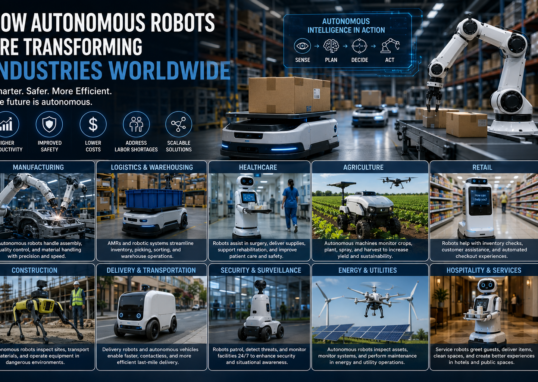
How Autonomous Robots Are Transforming Industries Worldwide
- 0
- 1,304 word
How Autonomous Robots Are Transforming Industries Worldwide – Autonomous robots are rapidly becoming one of the most influential technologies of the modern era....
Read out all