
- 0
- 1,197 word
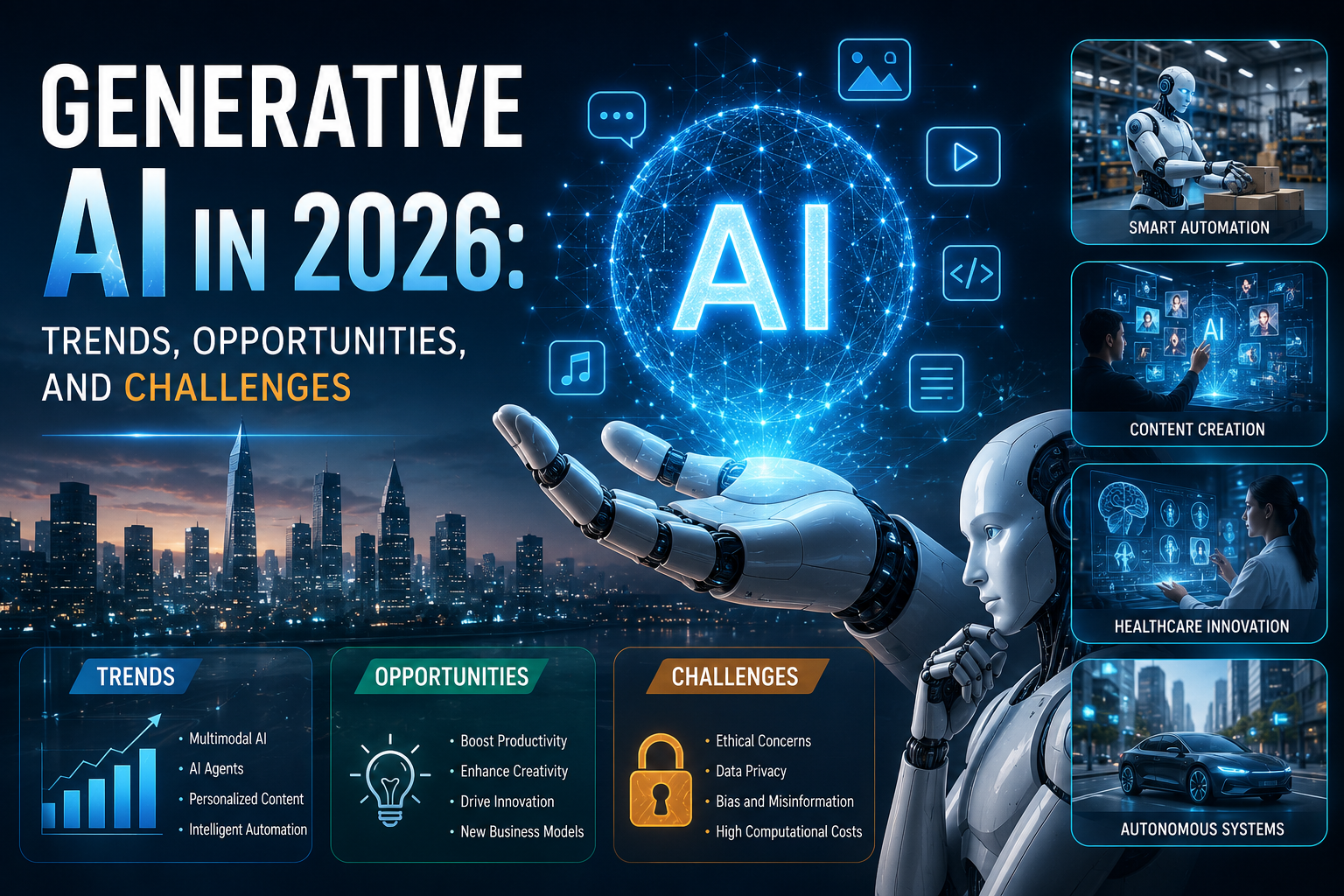
Generative AI in 2026: Trends, Opportunities, and Challenges – As we look towards 2026, the landscape of generative artificial intelligence (AI) is witnessing significant advancements that are reshaping various sectors. One of the most notable trends is the iterative improvement of language models, which now exhibit an extraordinary capacity to understand and generate human-like text. These enhancements allow for more nuanced interactions and applications ranging from customer service to creative writing, further establishing generative AI as a pivotal tool in communications and content creation.
Another critical area of development is in image generation capabilities. Recent innovations have led to models that can not only create high-resolution images from textual descriptions but also enable real-time modifications, fostering creativity in fields such as advertising, gaming, and design. This shift towards intuitive interfaces for artists and designers demonstrates the increased integration of generative AI in creative industries, allowing for faster prototyping and more immersive experiences.
Furthermore, the ethical considerations surrounding AI technology are gaining prominence. As the use of generative AI expands, discussions about transparency, bias mitigation, and accountability are becoming central to its deployment. Researchers and developers are actively exploring methods to embed ethical frameworks within AI systems to ensure responsible use, especially as these technologies become commonplace in consumer products.
The integration of generative AI into everyday applications is also on the rise. From automated content generation for social media platforms to personalized recommendations in e-commerce, the seamless incorporation of AI in consumer interactions is transforming user experiences. As generative AI continues to evolve, its capacity to streamline tasks and enhance creativity will likely lead to further opportunities in diverse domains, making it a cornerstone of innovation in the coming years.
Opportunities Created by Generative AI
As we look towards 2026, the potential applications for generative AI are vast, offering remarkable opportunities across various sectors such as entertainment, education, advertising, and content creation. One of the most striking areas where generative AI is making headway is in the entertainment industry.
Companies are increasingly employing these technologies to generate scripts, produce music, and even create game environments, thereby reducing production times and costs. For instance, studios are utilizing AI algorithms to analyze audience preferences, leading to tailored content that is highly likely to resonate with viewers, ensuring not only increased engagement but also substantial revenue growth.
In the realm of education, generative AI presents transformative opportunities that can personalize student learning experiences. Through AI-powered adaptive learning platforms, educators can develop customized curricula that respond to the unique needs of individual students. Case studies show improved engagement and retention rates as students interact with content tailored specifically to their learning styles and progress.
Simultaneously, the advertising sector is harnessing the power of generative AI to craft hyper-targeted campaigns. By analyzing consumer data, AI can generate compelling ad content that speaks directly to the motivations and interests of targeted demographics.
Companies can create a variety of engaging ad copies rapidly, allowing for more flexibility and experimentation within marketing strategies, ultimately leading to heightened effectiveness and growth in conversions.
In content creation, generative AI tools are assisting writers and marketers alike in producing high-quality content at unprecedented speeds. From blog posts to social media updates, AI has the capability to generate ideas or even entire articles that meet the criteria set by human editors, allowing for efficiency and innovation in storytelling.
These examples of generative AI’s application underline its transformative potential. As more organizations adopt these innovative technologies, they can unlock new revenue streams while enhancing operational efficiency.
Challenges Facing the Generative AI Landscape
The rapid evolution of generative AI technologies has brought forth a multitude of significant challenges that stakeholders must address. One of the primary concerns is data privacy. As generative AI systems often require vast amounts of data to produce meaningful outputs, ensuring the integrity and confidentiality of sensitive data has become paramount. Stakeholders must adopt robust data governance frameworks to mitigate privacy risks while complying with increasingly stringent data protection regulations.
Intellectual property issues pose another complex challenge. As generative AI can create content that closely resembles existing works, determining ownership and copyright can lead to legal disputes. The ambiguity surrounding the creations of AI raises questions about the rights of the developers versus the rights of the original content creators.
Navigating these intellectual property laws will require collaboration between technologists, legal experts, and policymakers to create clear guidelines.
Job displacement is also a pressing concern as generative AI can automate tasks traditionally performed by human workers. While AI can enhance productivity, it may lead to significant changes in the job market, with certain roles becoming obsolete. It is crucial for businesses and governments to consider reskilling and upskilling initiatives to help workers transition into new roles that leverage AI technology.
Moreover, the potential for misinformation generated by AI systems poses risks to public trust and societal coherence. As generative AI becomes more sophisticated, the line between authentic and synthetic content blurs, making it easier for deceptive information to spread. Addressing this challenge necessitates a concerted effort by technologists, media organizations, and regulators to develop tools and frameworks that can detect and mitigate the effects of misinformation.
The regulatory landscape for generative AI is still evolving, requiring stakeholders to remain agile and adaptable. Ethical considerations must also be at the forefront of discussions as these technologies become more integrated into societal functions. By recognizing and proactively addressing these challenges, stakeholders can harness the potential of generative AI while minimizing associated risks.
The Future of Generative AI: Predictions for 2030
As we approach the year 2030, the landscape of generative AI is expected to undergo significant transformation, driven by rapid advancements in technology and evolving societal needs. Industry experts predict that generative AI will become increasingly integrated into various sectors including healthcare, entertainment, and education, facilitating highly customized user experiences.
For instance, in healthcare, generative AI may be employed to produce tailored treatment plans, analyzing a patient’s unique data effectively to enhance outcomes.
Furthermore, the realm of creative industries will see generative AI play a pivotal role in the production of content such as literature, music, and visual arts. Advanced algorithms capable of understanding and mimicking human creativity could lead to collaborations between AI and artists, creating new forms of expression that challenge traditional artistic boundaries. This shift might also raise questions about authorship and the value of human creativity versus machine-generated content.
On the societal front, the proliferation of generative AI technology presents both opportunities and challenges. While this innovation can streamline various processes and offer unprecedented efficiencies, it also necessitates a robust framework for ethical considerations. Issues surrounding data privacy, security, and potential misuse cannot be overlooked.
As generative AI systems grow more sophisticated, there will be an increasing emphasis on responsible implementation and governance to ensure these tools augment human capabilities without overstepping ethical boundaries.
Experts advocate for a multidisciplinary approach to integrate generative AI responsibly across diverse fields. Collaborative efforts among policymakers, technologists, and ethicists are essential to develop standards and regulations that foster innovation while safeguarding societal interests. Ultimately, the trajectory of generative AI towards 2030 will not only depend on technological advancements but also on our collective efforts to harness its capabilities responsibly for the greater good.
Author

96livemarketing@gmail.com
Related Posts
Autonomous Mobile Robots Driving the Future of Logistics
- 0
- 1,458 word
Autonomous Mobile Robots Driving the Future of Logistics – The logistics industry is experiencing a major technological transformation. As global commerce expands and...
Read out all
Home Robots in 2026: Smarter Living Every Day
- 0
- 1,233 word
Home Robots in 2026: Smarter Living Every Day – As we move into 2026, the landscape of domestic life is being reshaped...
Read out allThe Future of Computing: How Photonic Technology is Set to Revolutionize Beyond Silicon Chips
- 0
- 1,141 word
Understanding Photonic Computing Photonic computing is an innovative approach that leverages the unique properties of light to carry out computations, marking a...
Read out all
AI Search Optimization: How to Rank in the Age of AI Search
- 0
- 1,191 word
AI Search Optimization: How to Rank in the Age of AI Search – The landscape of search engines is undergoing a significant...
Read out allThe Quantum Leap: Exploring the Rapid Advancement of Quantum Computing in 2026
- 0
- 1,163 word
Understanding Quantum Computing: The Basics Quantum computing represents a significant shift in how we approach computations, leveraging the principles of quantum mechanics...
Read out all
How AI is Transforming Robotics in 2026
- 0
- 1,118 word
How AI is Transforming Robotics in 2026 – As of 2026, the field of robotics has experienced a remarkable transformation, driven largely...
Read out all