
- 0
- 1,304 word
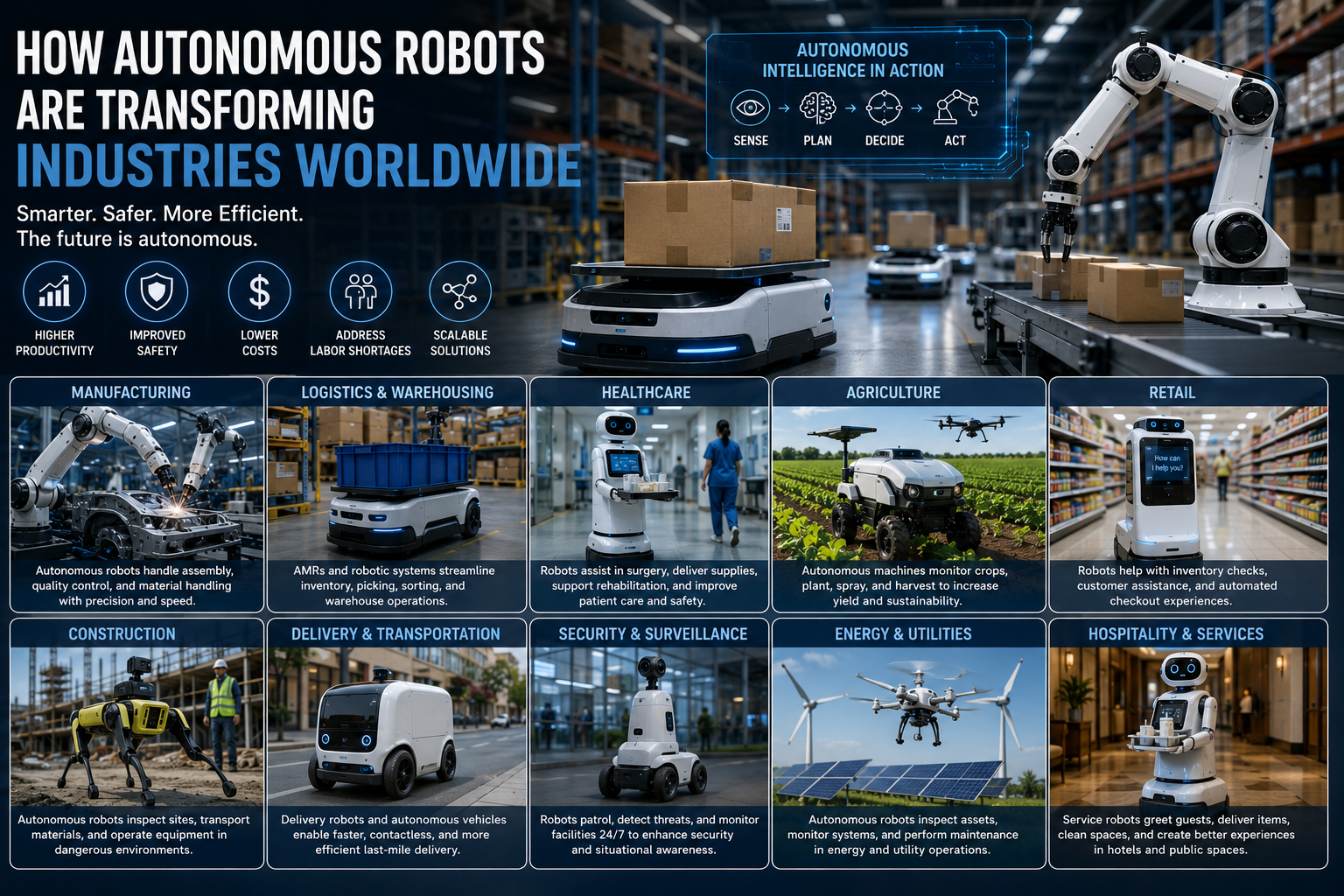
How Autonomous Robots Are Transforming Industries Worldwide – Autonomous robots are rapidly becoming one of the most influential technologies of the modern era. Powered by advances in artificial intelligence (AI), machine learning, computer vision, sensors, and robotics engineering, these intelligent machines can perform tasks with minimal or no human intervention. What was once considered futuristic technology is now being deployed across industries ranging from manufacturing and healthcare to logistics, agriculture, retail, and construction.
As businesses seek greater efficiency, productivity, and flexibility, autonomous robots are helping organizations automate complex processes while reducing operational costs. In 2026, the global robotics industry is experiencing unprecedented growth, with autonomous systems playing a central role in the transformation of workplaces and industries worldwide.
What Are Autonomous Robots?
Autonomous robots are machines capable of sensing their environment, making decisions, and performing actions without continuous human control.
Unlike traditional automated systems that follow predefined instructions, autonomous robots can adapt to changing situations and respond intelligently to their surroundings.
These robots typically rely on several technologies, including:
- Artificial Intelligence
- Machine Learning
- Computer Vision
- Sensors and LiDAR
- Navigation Systems
- Cloud Computing
- Robotics Software
By combining these technologies, autonomous robots can understand their environment, plan actions, and complete tasks independently.
Why Autonomous Robots Are Growing in Popularity
Several factors are driving the rapid adoption of autonomous robotics.
Labor Shortages
Many industries face workforce shortages, particularly in physically demanding or repetitive roles.
Autonomous robots help fill these gaps by performing tasks that are difficult to staff consistently.
Rising Demand for Efficiency
Businesses are under constant pressure to increase productivity and reduce operational costs.
Robots can work continuously without fatigue, helping organizations improve efficiency and output.
Advances in Artificial Intelligence
Modern AI enables robots to process vast amounts of information and make real-time decisions.
This has dramatically expanded the capabilities of autonomous systems.
Improved Technology Costs
As sensors, processors, and robotics components become more affordable, autonomous robots are becoming accessible to a wider range of businesses.
How Autonomous Robots Work
Autonomous robots rely on a combination of hardware and software systems.
Environmental Perception
Robots use cameras, sensors, and LiDAR systems to gather information about their surroundings.
This allows them to identify objects, obstacles, people, and environmental conditions.
Data Processing
AI algorithms analyze incoming data and determine the most appropriate course of action.
The robot continuously evaluates information and updates its decisions in real time.
Navigation
Navigation systems help robots move safely and efficiently.
Advanced robots can create maps, plan routes, and avoid obstacles while operating independently.
Learning and Adaptation
Machine learning allows robots to improve their performance based on experience.
As they encounter new situations, they can adapt and optimize their behavior.
Autonomous Robots in Manufacturing
Manufacturing is one of the largest adopters of autonomous robotics.
Modern factories increasingly use intelligent robots for:
- Assembly operations
- Quality inspections
- Material transportation
- Packaging
- Equipment monitoring
Autonomous robots help manufacturers increase production while maintaining high quality standards.
Because they can operate continuously, factories can achieve greater efficiency and productivity.
Smart Factories
The rise of smart manufacturing has accelerated robotics adoption.
Connected autonomous robots can communicate with other systems, coordinate activities, and optimize workflows across entire facilities.
Transforming Logistics and Warehousing
The logistics industry has experienced a major shift due to autonomous robotics.
Warehouse Automation
Autonomous robots perform tasks such as:
- Inventory movement
- Order picking
- Sorting packages
- Stock monitoring
- Shipping preparation
These systems help companies fulfill orders more quickly and accurately.
Autonomous Mobile Robots
Autonomous Mobile Robots (AMRs) can navigate warehouses independently without fixed pathways.
They adapt to changing environments and improve operational flexibility.
Last-Mile Delivery
Delivery robots are increasingly being used to transport goods directly to customers.
These systems support faster deliveries while reducing transportation costs.
Healthcare Applications
Healthcare is another sector benefiting significantly from autonomous robotics.
Surgical Assistance
Robotic systems assist surgeons with precise procedures, improving accuracy and reducing recovery times.
Hospital Logistics
Autonomous robots transport:
- Medical supplies
- Laboratory samples
- Medications
- Equipment
This allows healthcare workers to focus more on patient care.
Patient Assistance
Some autonomous robots help patients by providing information, monitoring health conditions, and supporting rehabilitation programs.
Elderly Care
As populations age, autonomous robots are increasingly being explored as tools for assisting older adults with daily activities and health monitoring.
Agriculture and Farming
Agriculture is undergoing rapid modernization through robotics and automation.
Autonomous agricultural robots can:
- Monitor crop health
- Detect pests and diseases
- Plant seeds
- Harvest crops
- Apply fertilizers
- Optimize irrigation
These technologies improve efficiency while supporting sustainable farming practices.
By reducing waste and increasing yields, autonomous robots help address growing global food demands.
Retail and Customer Service
Retail businesses are adopting autonomous robots to improve customer experiences and operational efficiency.
Inventory Management
Robots can scan shelves, monitor stock levels, and identify missing products.
This improves inventory accuracy and reduces labor requirements.
Customer Assistance
Some retailers use robots to:
- Guide customers
- Answer questions
- Provide product recommendations
- Offer store information
These capabilities create more engaging shopping experiences.
Automated Checkout
Autonomous technologies are supporting cashier-free shopping environments where transactions occur automatically.
Construction and Infrastructure
The construction industry is beginning to embrace autonomous robotics.
Applications include:
- Site inspections
- Material transportation
- Equipment operation
- Mapping and surveying
- Safety monitoring
Autonomous robots help reduce risks while improving project efficiency.
Infrastructure organizations also use robots to inspect bridges, roads, pipelines, and power systems.
Benefits of Autonomous Robots
The adoption of autonomous robots offers numerous advantages.
Increased Productivity
Robots can operate continuously without breaks, enabling higher output levels.
Improved Accuracy
Autonomous systems perform tasks consistently and precisely, reducing errors.
Enhanced Safety
Robots can handle dangerous tasks in hazardous environments, minimizing risks to human workers.
Cost Savings
Automation can reduce labor costs while improving operational efficiency.
Scalability
Businesses can expand operations more easily by deploying additional robotic systems.
Challenges and Limitations
Despite their benefits, autonomous robots face several challenges.
High Initial Investment
Advanced robotics systems often require substantial upfront costs.
Organizations must evaluate long-term returns before implementation.
Technical Complexity
Developing and maintaining autonomous systems requires specialized expertise.
Cybersecurity Risks
Connected robots may be vulnerable to cyber threats if security measures are inadequate.
Protecting robotic systems is becoming increasingly important.
Regulatory Considerations
Governments and industry organizations continue developing regulations to ensure safe and responsible deployment.
Workforce Transition
Automation changes job requirements, creating a need for workforce training and reskilling programs.
The Role of AI in Autonomous Robotics
Artificial intelligence is the foundation of autonomous robotics.
AI enables robots to:
- Understand environments
- Recognize objects
- Make decisions
- Learn from experience
- Interact with humans
Recent advances in generative AI, multimodal AI, and machine learning are making robots more intelligent and adaptable than ever before.
Future robots may possess increasingly sophisticated reasoning and planning capabilities.
Future Trends in Autonomous Robotics
Several emerging trends are expected to shape the future of autonomous robots.
Greater Human-Robot Collaboration
Future robots will work more closely with people in workplaces and homes.
Improved Mobility
Advancements in robotics hardware will enhance movement and navigation capabilities.
Enhanced Dexterity
Robots will become better at handling delicate and complex tasks.
More Affordable Systems
Technological improvements and larger production volumes will reduce costs.
Wider Industry Adoption
Autonomous robots are expected to expand into new sectors including education, hospitality, transportation, and public services.
Conclusion
Autonomous robots are transforming industries worldwide by bringing intelligence, efficiency, and adaptability to a wide range of applications. From manufacturing and logistics to healthcare, agriculture, retail, and construction, these systems are helping organizations improve productivity, reduce costs, and address workforce challenges.
Powered by advances in artificial intelligence, machine learning, sensors, and robotics engineering, autonomous robots are becoming increasingly capable of operating independently in complex environments. While challenges related to cost, regulation, cybersecurity, and workforce adaptation remain, the long-term benefits continue to drive rapid adoption.
As technology advances, autonomous robots will play an increasingly important role in shaping the future of industry and society, creating smarter, safer, and more efficient systems that redefine how work is performed around the world.
Author

96livemarketing@gmail.com
Related Posts
How Digital Twin Robotics Is Improving Real World Automation
- 0
- 1,591 word
How Digital Twin Robotics Is Improving Real World Automation – The rapid advancement of robotics and artificial intelligence is transforming industries around the...
Read out all
Robot Learning and the Next Generation of Intelligent Machines
- 0
- 1,597 word
Robot Learning and the Next Generation of Intelligent Machines – Robotics has evolved dramatically over the past few decades. Early robots were designed...
Read out all
How Surgical Robots Are Transforming Modern Healthcare
- 0
- 1,495 word
How Surgical Robots Are Transforming Modern Healthcare – Healthcare has experienced remarkable technological advancements over the past few decades, and one of...
Read out all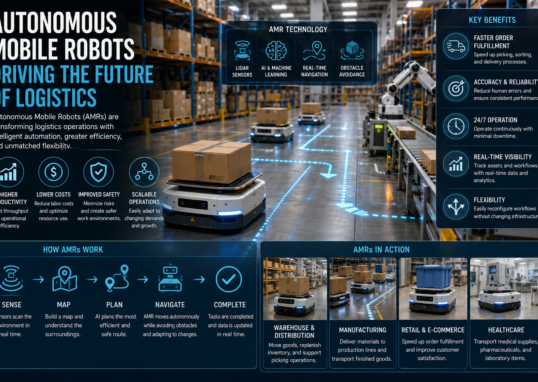
Autonomous Mobile Robots Driving the Future of Logistics
- 0
- 1,458 word
Autonomous Mobile Robots Driving the Future of Logistics – The logistics industry is experiencing a major technological transformation. As global commerce expands and...
Read out all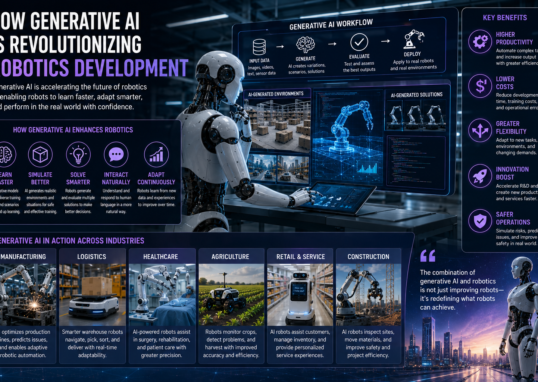
Generative AI for Robotics and the Future of Intelligent Machines
- 0
- 1,425 word
How Generative AI Is Revolutionizing Robotics Development – Artificial intelligence has already transformed countless industries, but one of the most exciting developments...
Read out all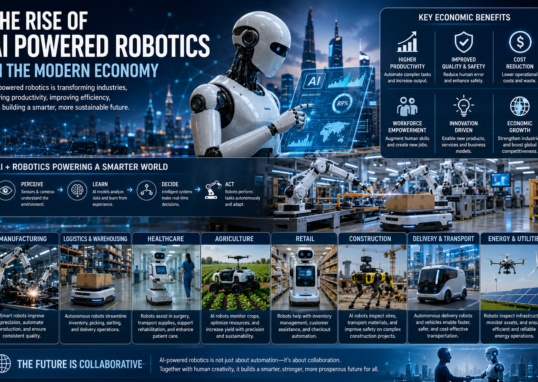
The Rise of AI Powered Robotics in the Modern Economy
- 0
- 1,510 word
The Rise of AI Powered Robotics in the Modern Economy – Artificial intelligence and robotics are two of the most transformative technologies of...
Read out all