- 0
- 1,343 word
Why Embodied AI Is Shaping the Future of Intelligent Machines – Artificial intelligence has made remarkable progress over the past decade. From chatbots and virtual assistants to advanced image recognition systems and generative AI models, intelligent software is becoming increasingly capable. However, a new frontier is emerging that could fundamentally change the relationship between AI and the physical world: Embodied AI.
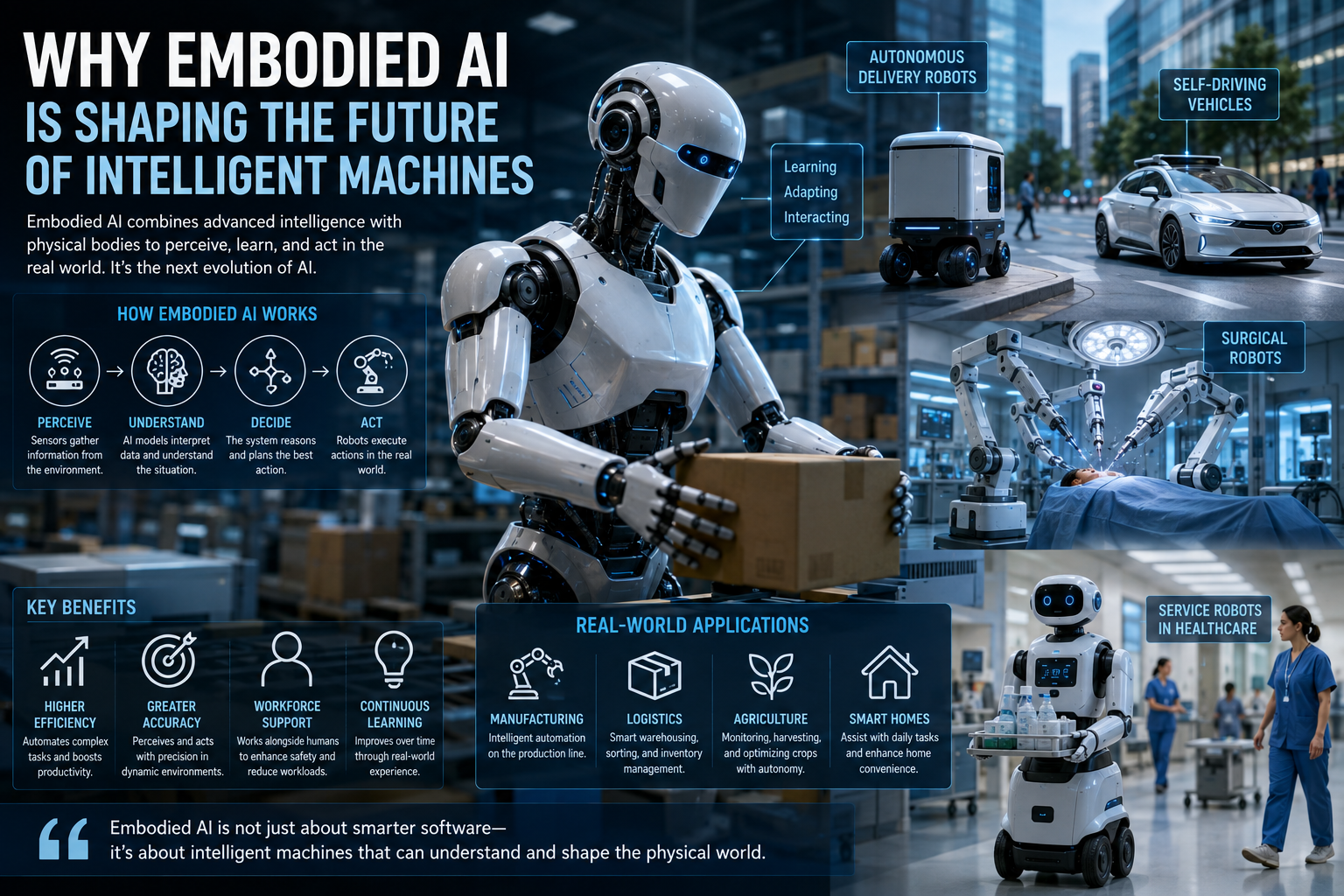
Unlike traditional AI systems that operate primarily in digital environments, Embodied AI combines artificial intelligence with physical bodies such as robots, autonomous machines, and smart devices. By interacting directly with the real world through sensors and actions, Embodied AI enables machines to learn, adapt, and perform tasks in ways that resemble human behavior.
As industries invest heavily in robotics, automation, and intelligent systems, Embodied AI is becoming one of the most important technologies shaping the future of intelligent machines.
What Is Embodied AI?
Embodied AI refers to artificial intelligence systems that exist within a physical form and can interact with their environment.
Traditional AI often operates in software-only environments. Examples include:
- Virtual assistants
- Search engines
- Recommendation systems
- Language models
Embodied AI, on the other hand, allows intelligent systems to perceive, move, manipulate objects, and make decisions in the physical world.
Examples include:
- Humanoid robots
- Autonomous delivery robots
- Self-driving vehicles
- Warehouse robots
- Home assistant robots
- Industrial automation systems
By combining AI with sensors, cameras, motors, and robotic hardware, embodied systems can learn through real-world experiences rather than relying solely on digital data.
Why Embodied AI Matters
Humans learn by interacting with their environment. We observe objects, move through spaces, and experience cause-and-effect relationships.
Embodied AI follows a similar principle.
Instead of simply processing information, embodied systems can:
- Observe their surroundings
- Interact with objects
- Navigate environments
- Adapt to changing conditions
- Learn from experience
This approach creates more capable and flexible machines that can solve complex real-world problems.
As a result, many experts consider Embodied AI to be a critical step toward more advanced forms of artificial intelligence.
How Embodied AI Works
Embodied AI combines multiple technologies that allow machines to understand and interact with the physical world.
Sensors and Perception
Robots use various sensors to gather information about their surroundings.
These may include:
- Cameras
- LiDAR systems
- Microphones
- GPS sensors
- Pressure sensors
- Motion detectors
The collected data allows the AI system to understand its environment.
Computer Vision
Computer vision enables machines to identify and interpret objects, people, obstacles, and locations.
This capability helps robots navigate safely and perform tasks accurately.
Machine Learning
Machine learning allows embodied systems to improve performance through experience.
Rather than relying entirely on predefined instructions, robots can adapt their behavior based on outcomes and feedback.
Motion and Control Systems
Robotic hardware converts AI decisions into physical actions.
Motors, actuators, and control systems enable movement, object manipulation, and interaction with the environment.
Real-Time Decision Making
Embodied AI continuously processes incoming information and adjusts behavior accordingly.
This enables intelligent responses to dynamic and unpredictable situations.
Embodied AI and Robotics
Robotics is one of the most important applications of Embodied AI.
Modern robots are becoming increasingly intelligent thanks to advances in AI models, sensors, and computing power.
Humanoid Robots
Humanoid robots represent one of the most visible examples of Embodied AI.
These machines are designed to:
- Walk like humans
- Manipulate objects
- Communicate naturally
- Perform everyday tasks
Because they operate in environments designed for people, humanoid robots have the potential to work across many industries.
Warehouse Automation
Warehouse robots use Embodied AI to:
- Navigate facilities
- Transport goods
- Pick products
- Manage inventory
These systems improve efficiency while reducing operational costs.
Service Robots
Hotels, hospitals, airports, and retail stores increasingly use service robots to assist customers and employees.
Embodied AI enables these robots to interact naturally with people while adapting to changing situations.
The Role of Embodied AI in Autonomous Systems
Autonomous systems rely heavily on Embodied AI.
Unlike traditional automated machines that follow fixed instructions, autonomous systems can make independent decisions.
Examples include:
Self-Driving Vehicles
Autonomous vehicles use sensors, cameras, and AI algorithms to:
- Detect obstacles
- Interpret traffic conditions
- Plan routes
- Make driving decisions
These capabilities allow vehicles to operate safely with minimal human intervention.
Delivery Robots
Autonomous delivery robots navigate sidewalks and public spaces to transport goods.
Embodied AI helps these machines avoid obstacles and interact safely with people.
Autonomous Drones
Drones use Embodied AI for tasks such as:
- Infrastructure inspection
- Agriculture monitoring
- Search and rescue operations
- Environmental surveying
Their ability to perceive and adapt to real-world conditions makes them highly versatile tools.
Why Embodied AI Is Advancing Rapidly
Several factors are accelerating the development of Embodied AI.
Better AI Models
Recent advances in large language models and multimodal AI provide robots with stronger reasoning and communication capabilities.
Improved Sensors
Modern sensors are becoming more accurate, affordable, and energy-efficient.
This improves environmental awareness and decision-making.
Increased Computing Power
Powerful processors enable real-time AI operations directly on robotic systems.
Advances in Simulation
Developers can train embodied AI systems in virtual environments before deploying them in the real world.
This reduces costs and accelerates learning.
Growing Industry Investment
Technology companies, startups, and research institutions are investing billions of dollars into embodied AI research and development.
This investment is driving rapid innovation across multiple sectors.
Applications Across Industries
Embodied AI is transforming a wide range of industries.
Manufacturing
Intelligent robots perform:
- Assembly operations
- Quality inspections
- Material handling
- Equipment monitoring
This improves productivity and operational efficiency.
Healthcare
Healthcare applications include:
- Surgical robots
- Patient assistance systems
- Rehabilitation robots
- Elderly care robots
Embodied AI supports both healthcare professionals and patients.
Logistics
Logistics companies use autonomous robots for warehousing, transportation, and delivery services.
These systems help meet growing demand for fast and reliable shipping.
Agriculture
Agricultural robots can:
- Monitor crops
- Detect diseases
- Harvest produce
- Optimize resource usage
This supports more sustainable farming practices.
Smart Homes
Home robots powered by Embodied AI can assist with cleaning, monitoring, security, and daily household tasks.
Benefits of Embodied AI
The rise of Embodied AI offers several significant advantages.
Greater Adaptability
Embodied systems can respond to changing environments and unexpected situations.
Improved Automation
Tasks that previously required human intervention can now be automated more effectively.
Enhanced Efficiency
Organizations can increase productivity while reducing operational costs.
Better Human-Machine Collaboration
Embodied AI allows robots to work alongside people in natural and intuitive ways.
Continuous Learning
Robots can improve performance through ongoing interaction with the real world.
Challenges Facing Embodied AI
Despite its potential, Embodied AI faces several obstacles.
Hardware Complexity
Building robots capable of operating reliably in real-world environments remains technically challenging.
Safety Concerns
Machines interacting with people must meet strict safety requirements.
High Development Costs
Advanced robotics systems require substantial investments in research, engineering, and manufacturing.
Data Requirements
Training embodied systems often requires enormous amounts of real-world and simulated data.
Ethical Questions
The increasing autonomy of intelligent machines raises important questions regarding accountability, privacy, and employment.
The Future of Embodied AI
The future of Embodied AI appears extremely promising.
Several developments are expected to accelerate progress over the coming years:
- More advanced humanoid robots
- Improved robot reasoning capabilities
- Better physical dexterity
- Greater autonomy
- Enhanced human-robot collaboration
- Broader adoption across industries
Many experts believe that Embodied AI represents one of the most important steps toward creating truly intelligent machines capable of understanding and interacting with the physical world.
As technology advances, embodied systems may become as common as smartphones and computers are today.
Conclusion
Embodied AI is shaping the future of intelligent machines by bringing artificial intelligence into the physical world. By combining advanced AI with robotics, sensors, perception systems, and real-time decision-making capabilities, embodied systems can learn from experience, adapt to changing environments, and perform increasingly complex tasks.
From humanoid robots and autonomous vehicles to healthcare assistants and warehouse automation, Embodied AI is transforming industries and expanding the possibilities of machine intelligence. While challenges related to cost, safety, and technical complexity remain, ongoing advancements continue to push the field forward.
As organizations invest in the next generation of robotics and automation technologies, Embodied AI is poised to become one of the defining innovations of the coming decade, reshaping how humans and machines work together in the real world.
Author

96livemarketing@gmail.com
Related Posts
How Digital Twin Robotics Is Improving Real World Automation
- 0
- 1,591 word
How Digital Twin Robotics Is Improving Real World Automation – The rapid advancement of robotics and artificial intelligence is transforming industries around the...
Read out all
Robot Learning and the Next Generation of Intelligent Machines
- 0
- 1,597 word
Robot Learning and the Next Generation of Intelligent Machines – Robotics has evolved dramatically over the past few decades. Early robots were designed...
Read out all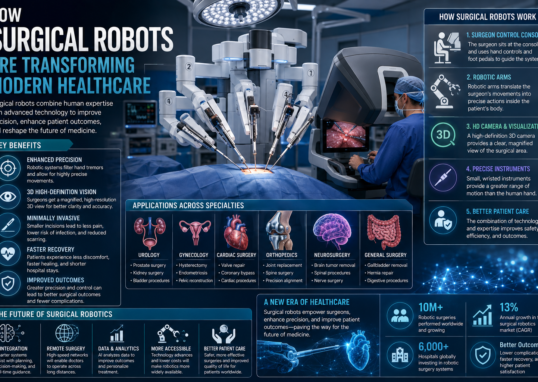
How Surgical Robots Are Transforming Modern Healthcare
- 0
- 1,495 word
How Surgical Robots Are Transforming Modern Healthcare – Healthcare has experienced remarkable technological advancements over the past few decades, and one of...
Read out all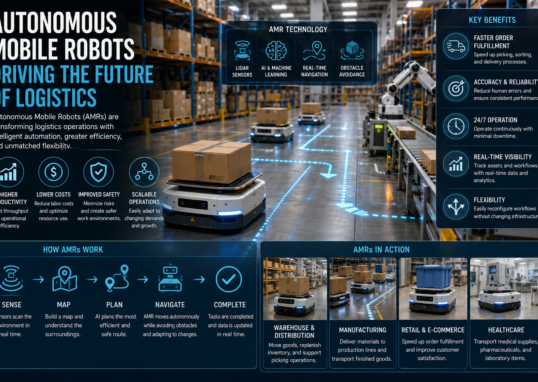
Autonomous Mobile Robots Driving the Future of Logistics
- 0
- 1,458 word
Autonomous Mobile Robots Driving the Future of Logistics – The logistics industry is experiencing a major technological transformation. As global commerce expands and...
Read out all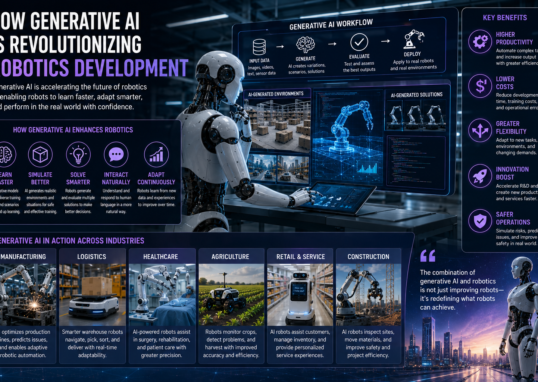
Generative AI for Robotics and the Future of Intelligent Machines
- 0
- 1,425 word
How Generative AI Is Revolutionizing Robotics Development – Artificial intelligence has already transformed countless industries, but one of the most exciting developments...
Read out all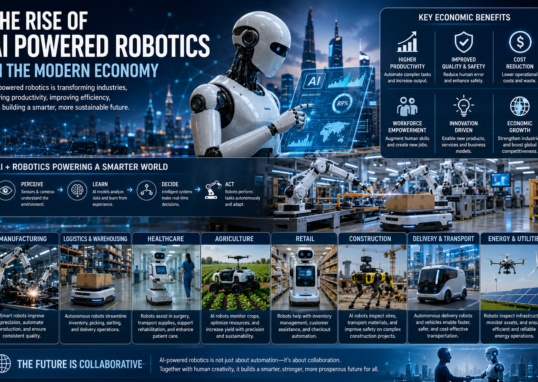
The Rise of AI Powered Robotics in the Modern Economy
- 0
- 1,510 word
The Rise of AI Powered Robotics in the Modern Economy – Artificial intelligence and robotics are two of the most transformative technologies of...
Read out all