
- 0
- 1,191 word
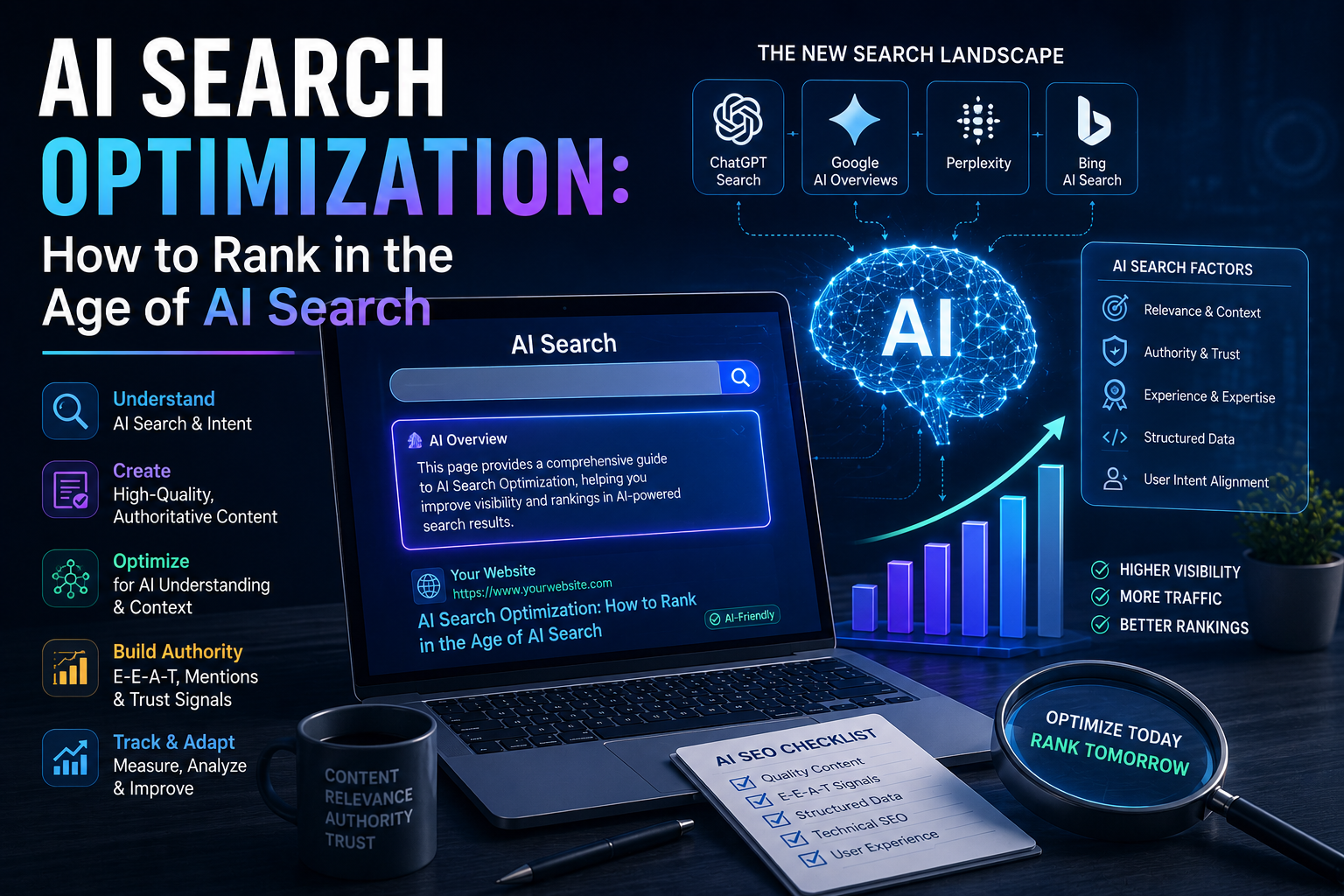
AI Search Optimization: How to Rank in the Age of AI Search – The landscape of search engines is undergoing a significant transformation with the advent of artificial intelligence (AI) technologies. Traditional search algorithms primarily relied on keyword matching techniques, where the relevance of content was determined based on the frequency of keywords. In contrast, AI search optimization leverages sophisticated algorithms that understand user intent, context, and the semantics of queries.
At the core of AI search technology is Natural Language Processing (NLP), which allows search engines to interpret human language in a more nuanced manner. Through NLP, AI models can comprehend not only individual keywords but also the relationships and meanings behind them. This capability enhances user experience by returning more relevant results that align with the user’s intent rather than merely matching terms. The integration of machine learning models further revolutionizes search ranking by enabling systems to learn from user interactions, adapting and improving the quality of search results over time.
Another critical element of AI search is semantic search, which focuses on understanding the meaning and context of words in a search query. This approach allows search engines to recognize synonyms and related concepts, providing comprehensive answers even when a query does not exactly match indexed content. AI-driven tools facilitate the interpretation and indexing of content based on its meaning rather than solely its keywords. This complexity in AI search systems indicates a shift toward more sophisticated mechanisms that assess information based on relevance and contextual understanding.
In essence, the evolution of search technology signifies a movement away from simple keyword-based systems to a more intelligent environment that prioritizes user satisfaction through contextualization and comprehension. The embrace of AI in search engines reflects a significant advancement in creating a holistic search experience.
Key Strategies for Optimizing Content for AI Search
In the evolving landscape of digital marketing, optimizing content for AI search engines requires a strategic approach that emphasizes quality, relevance, and user experience. The first pivotal strategy is to focus on creating high-quality content that addresses the needs and questions of your target audience. This involves thorough research and an understanding of the topics your audience is interested in, allowing you to craft informative and engaging content that is valuable to readers.
Utilizing keywords naturally within your content is essential for effective optimization. Keywords should be incorporated in a way that enhances readability rather than disrupts the flow of writing. It is crucial to understand the context in which users search for information, using related terms and synonyms to broaden the scope of your content’s visibility. Maintaining a balance between keyword usage and natural language ensures that your content remains engaging and authentic.
Moreover, leveraging structured data can significantly enhance how your content is perceived by AI search engines. Structured data helps search algorithms understand the context and intent behind your content, making it easier for them to deliver relevant results to users. Implementing schema markup, for instance, can improve your chances of appearing in rich snippets, thus enhancing visibility in search results.
User experience (UX) plays a vital role in AI search optimization as well. Websites need to be mobile-optimized and have fast loading speeds; these factors contribute significantly to user satisfaction and retention. A seamless user journey not only allows visitors to navigate your site effectively but also sends positive signals to AI search algorithms about your site’s credibility and reliability.
Ultimately, creating a robust content strategy is essential for adapting to AI trends and understanding user behavior. This strategy should be proactive rather than reactive, anticipating changes in AI technology and search patterns to ensure ongoing relevance and effectiveness.
Measuring Success: Tools and Metrics for AI Search Optimization
In the context of AI search optimization, utilizing the right tools and metrics is crucial for assessing the efficacy of your strategies. Analytics tools such as Google Analytics and SEMrush provide valuable insights into how your content is performing in the digital landscape. These platforms allow you to analyze organic traffic and understand user behavior, helping you to gauge the success of your optimization efforts.
Key Performance Indicators (KPIs) play an instrumental role in measuring the outcomes of AI search optimization. Metrics like organic traffic, page views, and engagement rates are essential in evaluating how well your content is resonating with users. A higher level of engagement, indicated by metrics such as time on page and bounce rate, suggests that your content is meeting user needs effectively. It is important to track and compare these metrics over time, establishing a data-driven foundation for refining your SEO strategies.
A/B testing is another powerful method for determining the effectiveness of various elements in your content. By comparing two different versions of a webpage or content piece, you can identify which version yields better performance in terms of engagement and user satisfaction. Continuous monitoring of your performance metrics allows for real-time adjustments, ensuring that your SEO tactics remain aligned with the evolving demands of AI technologies.
Furthermore, synthesizing data from various sources enables marketers to refine their approaches based on empirical evidence. This iterative process of testing, measuring, and refining is critical for maintaining a competitive edge. Consistent evaluation of your AI search optimization strategies, guided by metrics and analytics tools, will equip you to adapt and thrive in the ever-changing digital environment.
The Future of AI Search and Its Implications for Content Creators
The evolution of AI search technologies is set to redefine the landscape of content creation and digital marketing. With advancements in machine learning and natural language processing, search engines are increasingly capable of understanding user intent and delivering highly relevant results. One significant trend is the rise of voice search, fueled by the growing popularity of virtual assistants. As users become more accustomed to speaking rather than typing queries, content creators need to optimize their materials for natural language and conversational keywords that cater to this shift in user behavior.
Visual search is another promising area, with AI capabilities allowing users to search using images instead of words. This transformative approach necessitates that digital marketing strategies incorporate visual content, enhancing engagement and reach. Content creators will be required to invest in high-quality images and videos optimized for search engines, ensuring their work is easily discoverable through visual queries. Moreover, with the integration of augmented reality (AR) and virtual reality (VR), how information is consumed could shift dramatically, presenting both challenges and opportunities for creative engagement.
As AI search continues to advance, user expectations will evolve. Real-time personalization will likely become commonplace, with search engines providing tailored results based on individual behavior, location, and preferences. This necessitates that content creators refine their SEO strategies to prioritize personalization, utilizing data analytics to understand their target audience’s needs better. Adaptation to these trends is crucial; failing to do so may result in diminished visibility in search results.
In conclusion, the future of AI search technology will require content creators to remain agile and innovative. By embracing new trends such as voice and visual search, and focusing on personalization, they will be better positioned to meet the demands of an increasingly sophisticated digital landscape.
Author

96livemarketing@gmail.com
Related Posts
Autonomous Mobile Robots Driving the Future of Logistics
- 0
- 1,458 word
Autonomous Mobile Robots Driving the Future of Logistics – The logistics industry is experiencing a major technological transformation. As global commerce expands and...
Read out all
Home Robots in 2026: Smarter Living Every Day
- 0
- 1,233 word
Home Robots in 2026: Smarter Living Every Day – As we move into 2026, the landscape of domestic life is being reshaped...
Read out allThe Future of Computing: How Photonic Technology is Set to Revolutionize Beyond Silicon Chips
- 0
- 1,141 word
Understanding Photonic Computing Photonic computing is an innovative approach that leverages the unique properties of light to carry out computations, marking a...
Read out all
Generative AI in 2026: Trends, Opportunities, and Challenges
- 0
- 1,197 word
Generative AI in 2026: Trends, Opportunities, and Challenges – As we look towards 2026, the landscape of generative artificial intelligence (AI) is...
Read out allThe Quantum Leap: Exploring the Rapid Advancement of Quantum Computing in 2026
- 0
- 1,163 word
Understanding Quantum Computing: The Basics Quantum computing represents a significant shift in how we approach computations, leveraging the principles of quantum mechanics...
Read out all
How AI is Transforming Robotics in 2026
- 0
- 1,118 word
How AI is Transforming Robotics in 2026 – As of 2026, the field of robotics has experienced a remarkable transformation, driven largely...
Read out all