
- 0
- 1,233 word
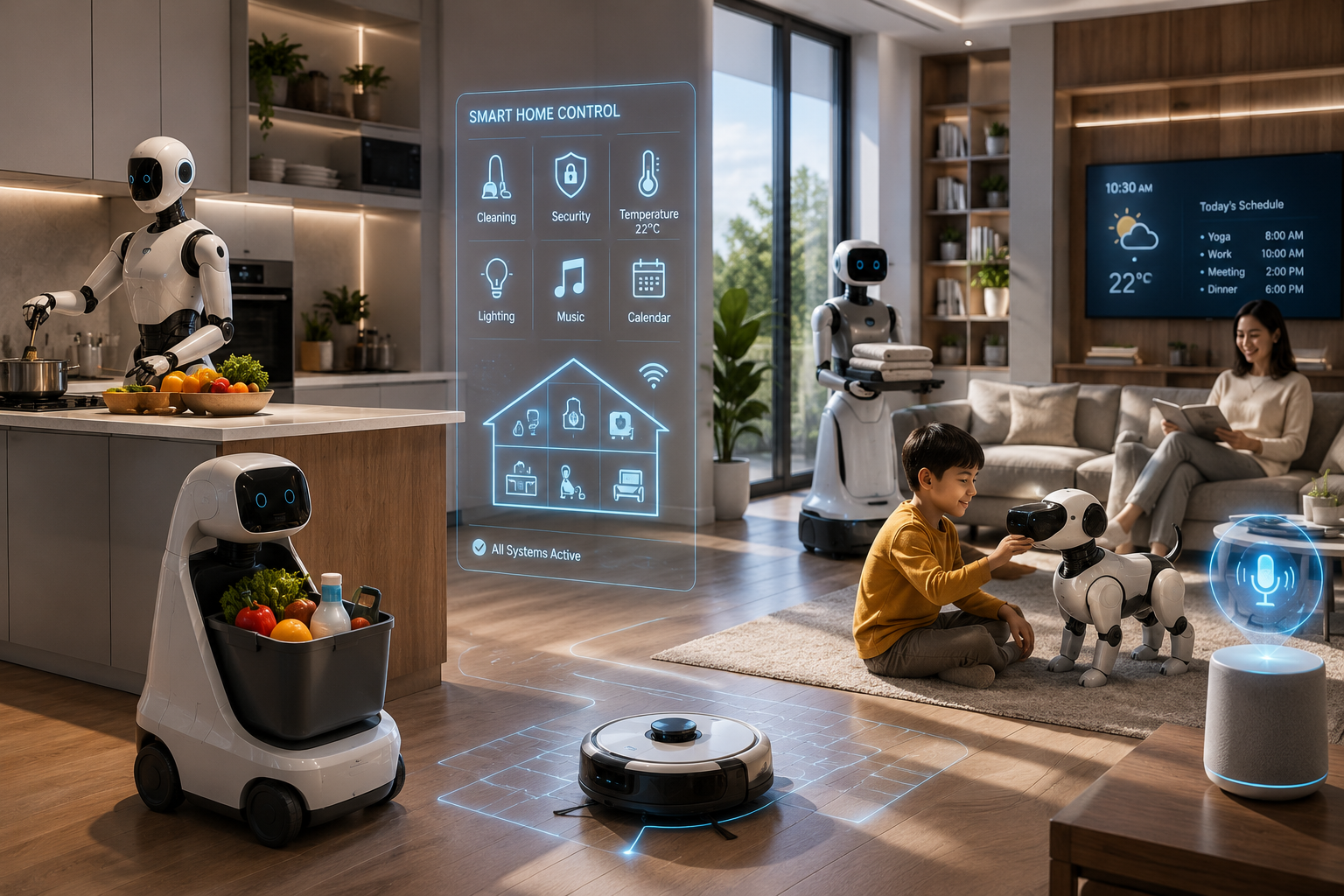
Home Robots in 2026: Smarter Living Every Day – As we move into 2026, the landscape of domestic life is being reshaped by the advent of home robots. These smart machines, equipped with advanced artificial intelligence and machine learning capabilities, are increasingly being integrated into everyday tasks, enhancing the efficiency and convenience of household management. The technology behind these robots has progressed significantly, allowing them to perform a variety of functions that were once the realm of science fiction.
In 2026, home robots come in many forms, ranging from automated vacuum cleaners and lawn mowers to sophisticated assistants capable of engaging in conversation or managing household schedules. The functionality of these devices has expanded to include cooking assistance, elderly care, and home security monitoring, showcasing their versatility and adaptability to different household needs. Each type of robot is engineered to address specific tasks, alleviating the burden of manual chores and freeing up time for residents to focus on more fulfilling activities.
The rising popularity of robotic assistance can be attributed to changing societal attitudes towards technology. With each advancement, the acceptance of robots in households has grown, propelled by improved user interfaces, affordability, and a greater awareness of the benefits these machines can provide. Today’s families are more willing to embrace automation, driven by the desire for a more efficient lifestyle and the need for assistance in managing health and safety.
Furthermore, reviews and studies highlight the effectiveness of these robots in augmenting traditional domestic roles, enhancing productivity without compromising personal interactions. As technology continues to evolve, so too will the integration and acceptance of home robots, creating a future where smart machines become an integral part of everyday life for many households.
Types of Home Robots and Their Functions
As we navigate through 2026, the landscape of home robotics reflects profound advancements, presenting a diverse array of robots designed to enhance our everyday lives. Among these, robotic vacuum cleaners stand out as one of the most common and widely utilized home robots. These devices autonomously traverse living spaces, utilizing sophisticated sensors and mapping technology to efficiently clean various surfaces. Many models feature advanced navigation systems that enable them to avoid obstacles, adapt to different floor types, and even return to their charging stations when battery levels are low, thereby offering remarkable convenience.
Another significant category is robotic lawn mowers. Engineered for efficiency and ease of use, these robots automatically tend to lawns, cutting grass with precision. Utilizing GPS and perimeter mapping, they are capable of maneuvering around obstacles and adjusting their mowing patterns based on the growth patterns of the grass, all while operating quietly and autonomously. This reduces not only the time spent on lawn maintenance but also the physical exertion associated with traditional mowing.
Moreover, personal assistant robots have begun to revolutionize home interaction. Equipped with artificial intelligence, these robots provide various functions such as managing household schedules, providing reminders, and even controlling smart home systems like lighting, security, and temperature. Many include voice recognition technology, enabling users to issue commands and engage in conversations, making them integral tools for modern living.
Lastly, cooking robots are gaining traction in home kitchens. These devices can prepare meals with minimal human intervention, featuring programmable cooking sequences, ingredient recognition, and even adjustments based on dietary preferences. By automating cooking tasks, they allow users to enjoy gourmet meals without the need for extensive culinary expertise.
In combination, these home robots illustrate the breadth of robotic solutions available, showcasing the remarkable capacity for technology to enhance homemaking through convenience and efficiency in 2026.
Impact on Daily Life: Efficiency and Lifestyle Changes
In 2026, the integration of home robots into households has dramatically changed the way individuals manage their daily lives. One of the most significant impacts is the improvement in household efficiency. Home robots, equipped with advanced artificial intelligence and machine learning capabilities, now handle time-consuming chores such as cleaning, laundry, and even meal preparation. This automation reduces the physical burden on family members, allowing them to dedicate time to other meaningful activities, such as leisure or personal development.
Moreover, these machines contribute to improved time management. Many users report that the automation of routine tasks provides them with valuable hours back in their day. For instance, families can now spend weekends engaging in leisure activities rather than cleaning or running errands. In several case studies, families have highlighted how their home robots took care of tasks, enabling them to embark on family outings or participate in community events—activities that were previously sidelined due to the demands of household chores.
The presence of home robots has also influenced lifestyle changes and family dynamics. As chores become less burdensome, parents find themselves with more energy to interact and bond with their children. Conversely, there have been challenges introduced by these changes, such as potential dependency on technology and the impact on traditional family roles. For some, the reliance on robots can foster a disconnect in relationships, as the automation of household responsibilities may reduce the collaborative effort typically involved in maintaining a home.
Notably, real-life examples illustrate this duality; families that embrace robot assistance report increased happiness and time spent together while occasionally facing challenges in adjusting communication and expectations. Overall, the presence of home robots in daily life not only streamlines household tasks but also shifts how families interact, emphasizing both the benefits and complexities that come with this technological advancement.
The Future of Home Robotics: Trends and Predictions
As we look ahead to the future of home robotics beyond 2026, it is essential to reflect on the technological advancements that are likely to influence the evolution of smart machines. The rapid progression in artificial intelligence (AI) and machine learning is expected to play a significant role in transforming home robotics. For instance, we can anticipate a greater emphasis on robots that can learn from their environments and adapt to the specific needs of their users. This personalized approach will lead to an unprecedented level of assistance in daily tasks, from housekeeping to elderly care.
Furthermore, the integration of advanced sensors and connectivity features will enable these robots to communicate seamlessly with one another and with various smart devices in the home. Such interactions will enhance their functionality, providing users with a cohesive and interactive experience. Home robotics may evolve to become proactive in managing household tasks, monitoring security systems, and even offering companionship, thereby redefining traditional roles within the home.
Ethical considerations surrounding privacy and security will likely become a focal point in the development of home robotics. As these machines become increasingly embedded in our homes, concerns related to data collection and usage will demand attention. Manufacturers will need to ensure robust protection measures are in place to safeguard personal information while promoting transparency about how data is stored and utilized.
Another area of concern lies in the impact of home robots on the job market. While automation opens doors to efficiency and convenience, it also raises questions about employment displacement. Society will need to navigate this change carefully, considering policies that support workers and foster new job opportunities as traditional roles evolve due to automation.
In summary, the future of home robotics promises remarkable advancements driven by AI and machine learning, with profound implications for privacy, ethics, and the workforce. By understanding and addressing these facets, we can ensure that the integration of robotics into our everyday lives enriches rather than disrupts the fabric of our society.
Author

96livemarketing@gmail.com
Related Posts
How Digital Twin Robotics Is Improving Real World Automation
- 0
- 1,591 word
How Digital Twin Robotics Is Improving Real World Automation – The rapid advancement of robotics and artificial intelligence is transforming industries around the...
Read out all
Robot Learning and the Next Generation of Intelligent Machines
- 0
- 1,597 word
Robot Learning and the Next Generation of Intelligent Machines – Robotics has evolved dramatically over the past few decades. Early robots were designed...
Read out all
How Surgical Robots Are Transforming Modern Healthcare
- 0
- 1,495 word
How Surgical Robots Are Transforming Modern Healthcare – Healthcare has experienced remarkable technological advancements over the past few decades, and one of...
Read out all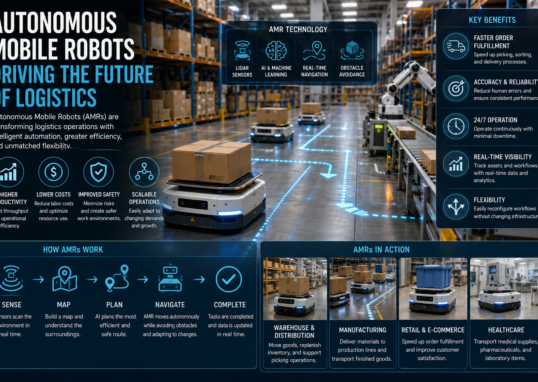
Autonomous Mobile Robots Driving the Future of Logistics
- 0
- 1,458 word
Autonomous Mobile Robots Driving the Future of Logistics – The logistics industry is experiencing a major technological transformation. As global commerce expands and...
Read out all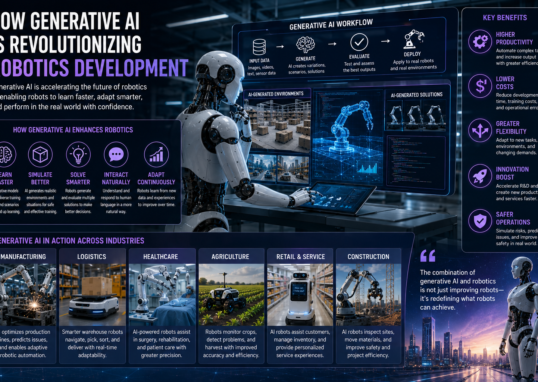
Generative AI for Robotics and the Future of Intelligent Machines
- 0
- 1,425 word
How Generative AI Is Revolutionizing Robotics Development – Artificial intelligence has already transformed countless industries, but one of the most exciting developments...
Read out all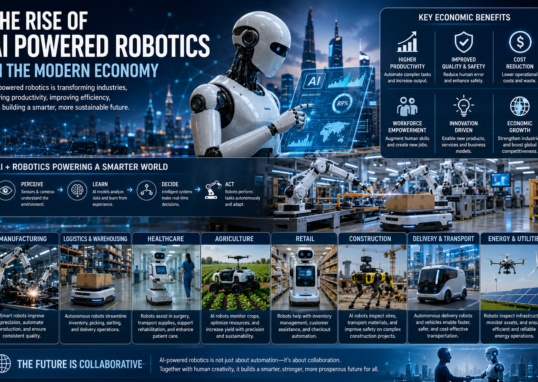
The Rise of AI Powered Robotics in the Modern Economy
- 0
- 1,510 word
The Rise of AI Powered Robotics in the Modern Economy – Artificial intelligence and robotics are two of the most transformative technologies of...
Read out all