
- 0
- 1,194 word
The Rise of AI Agents in Business Operations
In recent years, we have witnessed a transformative shift in how businesses streamline their operations and enhance productivity, a change significantly driven by the advancement of AI agents. By 2026, it is evident that AI agents have become a pivotal element in modern business ecosystems, evolving from rudimentary automation tools to sophisticated entities capable of performing complex tasks. This evolution is primarily attributed to advancements in machine learning, natural language processing (NLP), and robotics, which have collectively shaped the functionality and capabilities of AI agents.
Machine learning algorithms empower AI agents to analyze vast amounts of data, thus enabling them to learn from patterns and improve over time without the need for human intervention. This capability not only enhances efficiency but also allows businesses to make data-driven decisions with unprecedented accuracy. Meanwhile, advancements in natural language processing have enabled AI agents to understand and interpret human language with greater nuance, making them more effective in customer service roles and internal communications.
Robotic process automation (RPA) has also complemented the rise of AI agents by automating repetitive tasks that once consumed significant human resources. However, what sets AI agents apart from traditional automation tools is their inherent flexibility and adaptability. While traditional systems often require meticulous programming for each task, AI agents can be deployed across various functions and seamlessly adjust to new challenges or operational demands.
As businesses strive for agility in an increasingly competitive landscape, the adoption of AI agents emerges as a superior alternative, positioning organizations to respond swiftly to market changes. This advantage underscores the potential of AI agents to not only streamline existing processes but also to foster innovation, thereby redefining the boundaries of business operations. The landscape of operational efficiency is being reshaped, as companies leverage these advanced agents to navigate the complexities of modern commerce effectively.
AI Agents in Automation and Workflow Optimization
In today’s business landscape, AI agents are revolutionizing automation and workflow optimization, mitigating the challenges associated with manual processes. These intelligent systems are adept at handling repetitive tasks, allowing organizations to concentrate their human resources on more strategic functions. By seamlessly integrating AI agents into existing workflows, companies can achieve significant enhancements in efficiency and productivity.
For instance, major firms like Amazon and Microsoft have already adopted AI-driven automation to streamline their operations. Amazon employs AI agents to manage its inventory systems; these agents predict stock levels and automatically reorder supplies, significantly reducing human intervention. Similarly, Microsoft utilizes AI in its Microsoft 365 suite, where AI agents assist in scheduling meetings, managing emails, and sorting documents, thereby unburdening employees from mundane chores.
The presence of AI agents in these operations fosters not only increased productivity but also enhanced collaboration among teams. By reducing the time spent on routine tasks, employees are able to focus on more complex and creative responsibilities, ultimately leading to better outcomes for the organization. Furthermore, collaboration tools powered by AI can dynamically assemble project teams based on skill sets and availability, ensuring that projects are executed efficiently with the right personnel involved.
Moreover, the measurable impacts of AI on operational costs are considerable. Organizations employing AI-driven automation report up to a 30% reduction in operational expenses, stemming from increased accuracy and decreased labor overheads. By minimizing discrepancies and errors in workflow, AI agents ensure that processes remain smooth and function more cost-effectively. In conclusion, the incorporation of AI agents into automation and workflow optimization is proving indispensable for businesses seeking a competitive edge in their respective sectors.
Transforming Customer Service and Data Analysis with AI Agents
AI agents are playing a pivotal role in reshaping customer service by delivering personalized interactions that enhance the customer experience. Businesses are increasingly turning to AI-driven solutions to manage customer inquiries, support requests, and feedback. These intelligent agents are capable of understanding customer sentiment and preferences, allowing them to tailor responses that resonate with users. By leveraging natural language processing (NLP) and machine learning algorithms, AI agents can learn from previous interactions, enabling them to provide insightful and timely assistance.
One notable advantage of integrating AI into customer service is its ability to operate 24/7, ensuring that customers receive assistance whenever they need it. This level of availability can significantly boost customer satisfaction and loyalty. Additionally, AI agents can handle a vast number of inquiries simultaneously, reducing wait times and improving response rates. As a result, organizations experience higher levels of customer retention and engagement.
Moreover, AI agents excel in data analysis, enabling businesses to extract valuable insights from customer interactions. By analyzing trends and patterns in customer behavior, AI tools can inform business decisions and strategies. For example, a retail company might utilize AI agents to assess which products are frequently inquired about and adjust their inventory accordingly. This process not only optimizes stock levels but also enhances the shopping experience by ensuring that popular items are readily available.
Several companies have successfully integrated AI into their customer service and data analysis practices. A major telecommunications provider employed AI agents to streamline its customer support services, resulting in a 40% reduction in call center volume and a significant increase in customer satisfaction ratings. Similarly, an online streaming service utilized AI to personalize content recommendations, leading to increased viewer retention rates. These case studies highlight the transformative impact of AI agents in enhancing customer service and deriving actionable insights from data.
Challenges and Future Developments in AI Adoption
The integration of AI agents into business operations promises to streamline processes and enhance efficiency. However, several challenges impede the widespread adoption of AI-driven solutions in 2026. One notable concern is security. Businesses must address potential vulnerabilities that arise from integrating AI technologies into their systems. Cybersecurity threats, data breaches, and unauthorized access can compromise sensitive information and disrupt operations. Therefore, a rigorous approach to data protection is essential for any organization considering the implementation of AI.
Another significant challenge is the integration of AI systems with existing technologies. Many businesses operate on legacy systems that may not easily accommodate advanced AI applications. The need for compatibility can lead to increased costs and prolonged downtime during the integration process. Consequently, companies must carefully evaluate their IT infrastructure and possibly invest in new technologies to fully leverage AI capabilities.
Workforce displacement fears also present a notable barrier to the adoption of AI. Employees may worry that AI agents will replace their jobs, leading to resistance against new technologies. Addressing these concerns transparently is vital; businesses should promote AI as a tool that enhances human capabilities rather than a replacement for the workforce. Upskilling employees in AI technologies and fostering a culture of collaboration between humans and AI agents can alleviate this fear.
Looking ahead, current industry trends suggest significant growth in AI adoption across sectors such as healthcare, finance, and manufacturing. Innovations on the horizon include more sophisticated machine learning algorithms, improved natural language processing capabilities, and enhanced predictive analytics. Businesses that remain proactive in adopting AI are likely to gain a competitive advantage. As they navigate these challenges, adopting a strategic approach to AI integration is essential, emphasizing security, workforce development, and future-oriented innovations.
This Information Sponsored By: https://www.ez96live.com/
Author

96livemarketing@gmail.com
Related Posts
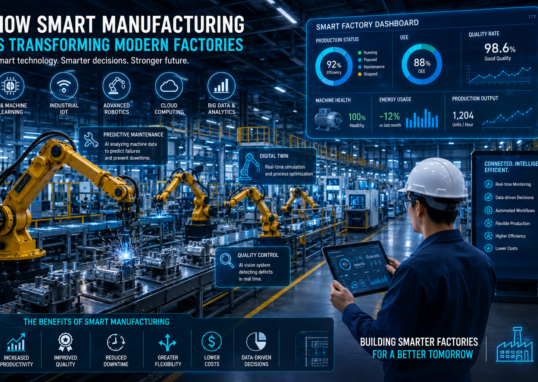
How Smart Manufacturing Is Transforming Modern Factories
- 0
- 1,258 word
How Smart Manufacturing Is Transforming Modern Factories – The manufacturing industry is experiencing a profound transformation driven by digital technologies, artificial intelligence,...
Read out all