
- 0
- 1,172 word
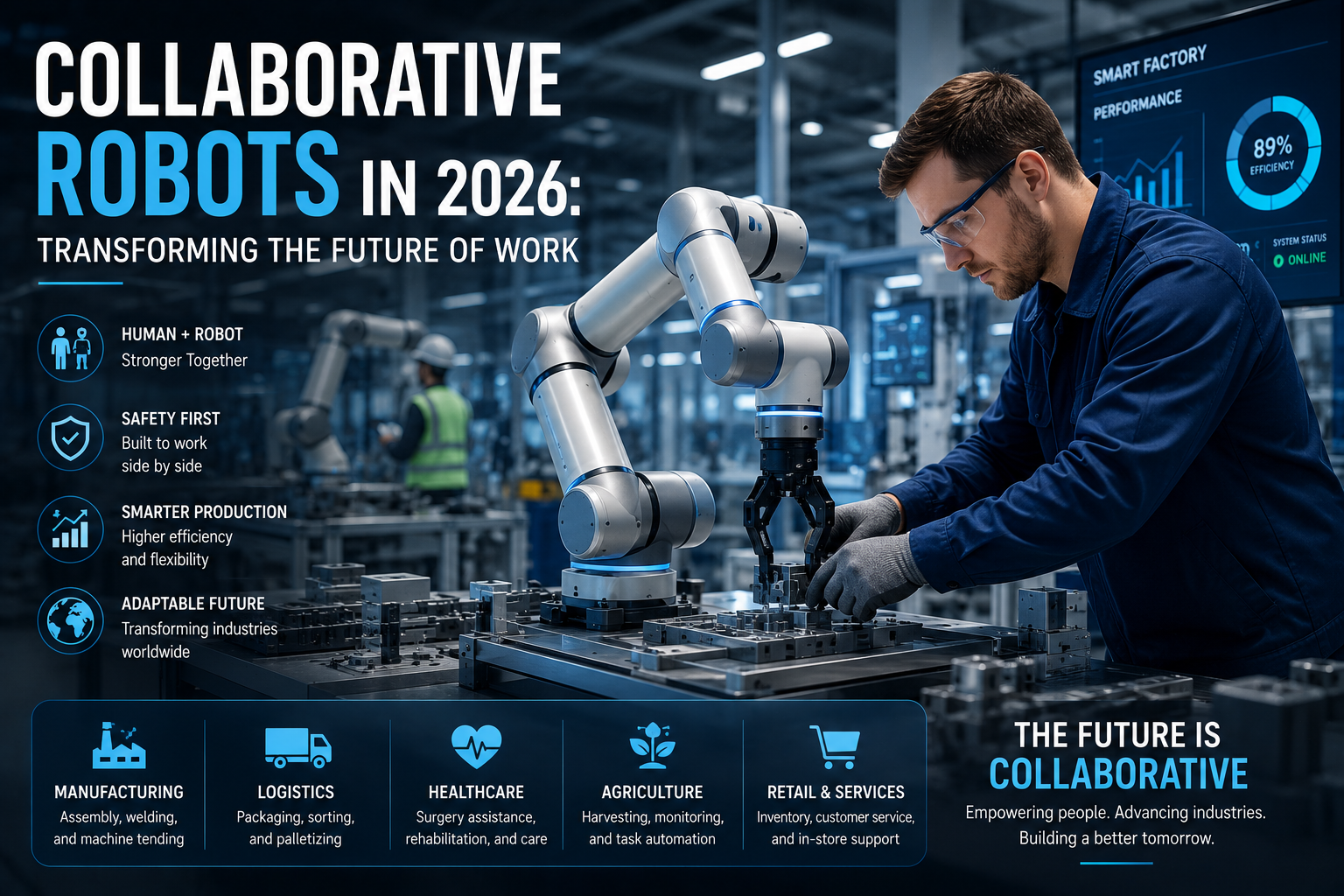
Collaborative Robots in 2026: Transforming the Future of Work – Collaborative robots, commonly referred to as cobots, represent a significant advancement in automation technology, designed to work alongside human operators in various settings. Unlike traditional industrial robots that typically operate in isolation within secured areas, cobots are engineered with advanced technologies that allow for safe interaction with human workers. This inherent safety feature is one of the primary distinctions between cobots and their conventional counterparts, highlighting a shift towards more integrated work environments.
The evolution of collaborative robots can be traced back to the early developments in robotics during the late 20th century. Initially, industrial robots were large, complex machines dedicated to high-volume production tasks, often hampered by rigidity and a lack of flexibility. As industries began to recognize the potential benefits of human-robot collaboration, the design of robots shifted drastically. Cobots emerged to fill this niche by incorporating adaptable attributes and safety systems that enable them to operate in close proximity to human workers.
Safety is paramount in the design of collaborative robots. Cobots are fitted with sensors that allow them to detect human presence and halt operation to prevent accidents, a feature that significantly reduces workplace injuries compared to traditional robots. Additionally, their collaborative nature means they can easily be programmed or reconfigured for a variety of tasks, enhancing productivity without sacrificing worker safety.
By 2026, the significance of collaborative robots will likely extend across various industries, including manufacturing, healthcare, and logistics. The increasing prevalence of cobots is expected to transform the nature of work itself, enabling companies to streamline processes and augment human capabilities. As industries continue to adopt these technologies, an understanding of their role and potential is essential for shaping the future of work.
Advancements in Collaborative Robot Technology
The technological landscape surrounding collaborative robots (cobots) is rapidly evolving, particularly as we approach 2026. A key driver of this transformation is the integration of artificial intelligence (AI) and machine learning (ML) capabilities within cobots. These technologies enable robots to learn from their environments and experiences, allowing them to adapt to various tasks with unprecedented efficiency. This capability enhances the autonomy of cobots, allowing them to work alongside human operators without the need for constant supervision or intervention.
Furthermore, the development of advanced sensors is significantly enhancing the functionality of collaborative robots. These sensors provide real-time feedback and improve decision-making processes, ensuring greater accuracy and safety during operations. For instance, vision systems equipped with powerful algorithms can facilitate precise positioning and object recognition, enabling cobots to navigate complex environments seamlessly. Such innovations are not only increasing the productivity of robotic systems but also fostering a safer work atmosphere.
The applications of these advancements are widespread across multiple industries, including manufacturing, healthcare, and logistics. In manufacturing, cobots are being utilized to automate repetitive tasks, thus allowing human workers to focus on more intricate functions requiring creativity and problem-solving skills. In the healthcare sector, cobots are designed to assist in surgical procedures, manage inventory, and even participate in patient care, thus optimizing operational efficiencies. In logistics, robots equipped with AI are revolutionizing supply chain management by predicting demand and enhancing warehouse operations.
As these technologies continue to merge and advance, the role of collaborative robots in various industries will only expand. This synergy between humans and robots is set to create smarter, more efficient work environments, transforming not just how tasks are performed but also redefining the future of work altogether.
The Impact of Collaborative Robots on the Workforce
The integration of collaborative robots, commonly referred to as cobots, is profoundly influencing the workforce landscape. As organizations increasingly adopt these advanced technologies, growing concerns regarding potential job displacement have surfaced. However, research and real-world applications reveal that cobots do not necessarily replace human jobs; rather, they augment the capabilities of the existing workforce.
Cobots are designed to work alongside humans, handling repetitive and strenuous tasks. This collaboration allows employees to focus on more complex responsibilities that require critical thinking, creativity, and emotional intelligence—qualities that machines cannot replicate. By enhancing human productivity, cobots can lead to improved job satisfaction among workers as they are liberated from menial tasks and can engage in more fulfilling roles.
Success stories from various industries illustrate the positive impact of integrating collaborative robots. For instance, in manufacturing, companies that have implemented cobots report significant increases in efficiency and output. One notable case is that of a automotive assembly line where cobots assist in heavy lifting and precision tasks. By doing so, they not only enhance productivity but also reduce worker fatigue and minimize workplace injuries, contributing to a safer working environment.
Furthermore, the adoption of cobots has the potential to create new technology-driven roles. As businesses evolve to incorporate these advanced systems, there is an increased demand for skilled workers who can manage and maintain cobot operations. This shift signifies a transformation in workforce dynamics, where training and upskilling become essential components. Therefore, rather than diminishing job opportunities, cobots are fostering the creation of new career paths, emphasizing the need for adaptability and continuous learning.
In conclusion, collaborative robots are reshaping the future of work, not through job displacement, but by empowering employees and creating new opportunities. Their integration into various industries illustrates a promising trend towards enhanced productivity and job satisfaction, marking a significant shift in workforce development.
Future Trends and Predictions for Collaborative Robots
As we advance toward 2026, the landscape of collaborative robots (cobots) is likely to witness significant evolution and diversification across various industries. The market for cobots is anticipated to experience robust growth, driven by increasing demand for automation solutions that enhance productivity while ensuring worker safety. Industry analysts predict that the annual growth rate of the cobot market could exceed 30%, reflecting a broadening acceptance and integration of robotic systems in work environments.
One of the notable trends is the evolving role of cobots in different sectors, particularly manufacturing, healthcare, and logistics. In manufacturing, cobots are expected to assist workers in repetitive tasks, allowing human employees to focus on more complex and creative responsibilities. In healthcare, the deployment of collaborative robots could enhance patient care through tasks such as medication dispensing and assistive robotics for the elderly. The logistics sector may also see increased use of cobots for inventory management and automated sorting processes, highlighting their versatility.
With the anticipated growth comes the necessity for regulatory frameworks governing the safe use of collaborative robots in workplaces. Policymakers may introduce regulations designed to ensure that cobots complement human workers rather than replace them, fostering an atmosphere of collaboration rather than competition. Additionally, the ethical considerations surrounding cobot adoption are expected to gain prominence, compelling organizations to address concerns about job displacement and privacy issues associated with robotic systems.
Human-robot collaboration will be pivotal to the successful integration of these technologies. By prioritizing user-friendly interfaces and emphasizing joint efficiency, organizations can create harmonious environments where humans and robots coexist and work together seamlessly. In summary, the future of collaborative robots appears promising, with advancements predicted to enrich work practices while addressing key ethical and regulatory challenges.
Author

96livemarketing@gmail.com
Related Posts
Autonomous Mobile Robots Driving the Future of Logistics
- 0
- 1,458 word
Autonomous Mobile Robots Driving the Future of Logistics – The logistics industry is experiencing a major technological transformation. As global commerce expands and...
Read out all