
- 0
- 3,678 words
body {
font-family: ‘Segoe UI’, Tahoma, Geneva, Verdana, sans-serif;
line-height: 1.6;
color: #333;
max-width: 900px;
margin: 20px auto;
padding: 0 20px;
background-color: #f9f9f9;
}
h1, h2, h3 {
color: #2c3e50;
margin-top: 30px;
margin-bottom: 15px;
}
h1 {
font-size: 2.5em;
text-align: center;
border-bottom: 2px solid #3498db;
padding-bottom: 10px;
}
h2 {
font-size: 1.8em;
border-bottom: 1px solid #ddd;
padding-bottom: 5px;
}
h3 {
font-size: 1.3em;
color: #3498db;
margin-top: 25px;
}
p {
margin-bottom: 15px;
}
ul, ol {
margin-bottom: 15px;
padding-left: 25px;
}
li {
margin-bottom: 8px;
}
strong {
color: #e74c3c;
}
em {
font-style: italic;
color: #555;
}
Badminton is a dynamic and exciting sport that combines agility, power, and strategic thinking. This comprehensive guide will walk you through the essential steps to understand, practice, and significantly improve your badminton game, drawing inspiration from top-tier players like Wooi Yik and Aaron Chia.
Whether you’re a beginner looking to grasp the fundamentals or an intermediate player aiming to refine your technique and strategy, you’ll find actionable advice here to help you dominate the court and enjoy the game even more.
What You’ll Need
Before you step onto the court, ensure you have the right gear to support your training and performance:
- A Badminton Racket: Choose one that feels comfortable in your hand, considering its weight, balance, and grip size. Don’t break the bank initially, but a decent quality racket makes a difference.
- Shuttlecocks: Both nylon (more durable for practice) and feather (for match play and better flight characteristics) are essential.
- Proper Footwear: Badminton-specific shoes offer excellent grip, ankle support, and cushioning, crucial for quick lateral movements and jumps.
- Athletic Apparel: Light, breathable clothing that allows for a full range of motion.
- A Badminton Court: Access to a properly marked court with a net.
- Water Bottle: Stay hydrated! Badminton is a high-intensity sport.
- A Practice Partner or Coach: Invaluable for drills, sparring, and receiving constructive feedback.
- Dedication and Patience: Improvement takes time, effort, and a willingness to learn from every shot.
Steps to Elevate Your Badminton Game
-
Master Your Grip and Stance
Your grip is the foundation of every shot, and your stance dictates your readiness to react. Without a proper grip, you’ll struggle with power, control, and deception. Without an effective stance, you’ll always be a step behind.
- The Forehand Grip (Handshake Grip): Hold the racket as if you’re shaking hands with it. Your thumb should rest on the wide bevel of the handle. This grip is versatile for most forehand shots and overhead strokes. Ensure your grip is relaxed; gripping too tightly reduces wrist flexibility and power.
- The Backhand Grip: Rotate your hand slightly from the forehand grip so your thumb is flat on the wider surface of the handle, providing leverage for backhand shots. Many players use a thumb-up grip for backhand clears and drops. Practice switching between these two grips smoothly and quickly.
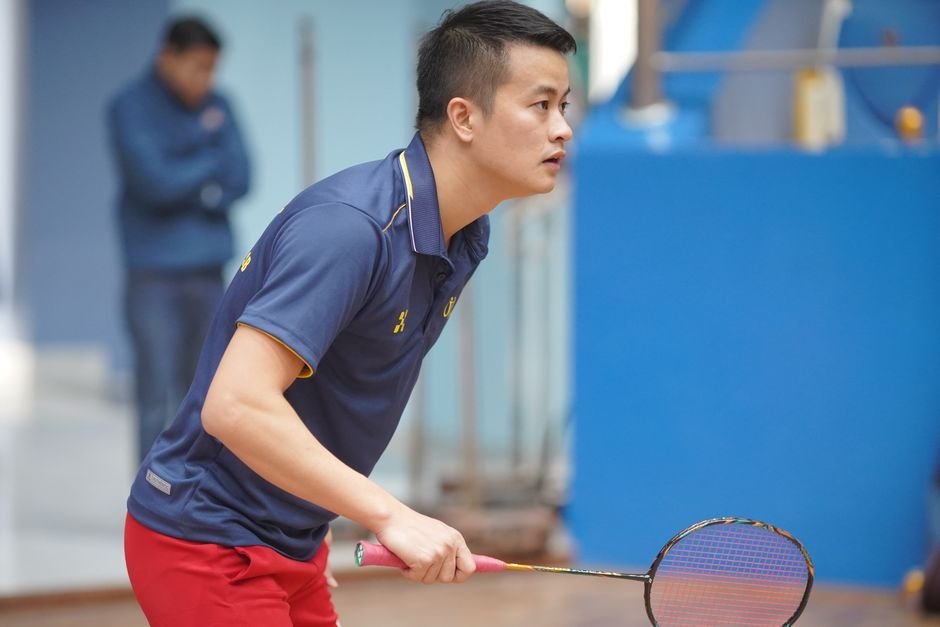
- The Ready Stance: This is your default position between shots. Stand with your feet shoulder-width apart, knees slightly bent, and your racket held in front of you, ready to move in any direction. Your weight should be on the balls of your feet, allowing for explosive pushes off the ground. Maintain a balanced and alert posture, anticipating your opponent’s next shot.
- Attacking and Defensive Stances: As you move to hit a shot, your stance will adapt. For attacking shots like a smash, you’ll often jump and rotate your body, landing in a stable position. For defensive shots, your stance might be lower and wider, ready to retrieve a powerful shot.
Actionable Tip: Practice shadow badminton focusing solely on your grip changes and ready stance. Stand in the center, simulate an opponent’s shot to different corners, move, hit, and return to your ready stance, ensuring your grip is correct for each simulated shot.
-
Develop Flawless Footwork
Badminton is often described as “running a marathon in a phone booth.” Your footwork is paramount for reaching the shuttle early, hitting it effectively, and recovering for the next shot. Efficient footwork saves energy and improves your shot quality significantly.
- The Split Step: As your opponent hits the shuttle, perform a small jump or hop, landing on the balls of your feet. This pre-loads your leg muscles, allowing for an explosive first step in any direction. It’s crucial for anticipation and quick reactions.
- The Basic Movement Patterns (The ‘Eight-Point’ Footwork): Learn to move efficiently to all four corners of the court (front-right, front-left, back-right, back-left) and the center. Practice lunging to the net, shuffling to the sides, and using skipping or crossover steps to the rear court. Always aim to return to your base position (center of the court) after each shot.
- Lunge Technique: For net shots and front-court retrievals, a controlled lunge is vital. Extend one leg forward, bending the knee, while keeping your back straight and your racket low. Push off the front foot to recover quickly.
- Recovery: After hitting a shot, your immediate focus should be on recovering to your base position. Use quick, small steps to get back, always maintaining balance and readiness for the next shot.
- Explosiveness and Balance: Incorporate drills that improve your explosive power (e.g., box jumps, plyometrics) and balance (e.g., single-leg stands). These attributes are critical for quick changes in direction and stable landings after jumps.
Actionable Tip: Set up cones or markers in the four corners of the court. Practice moving to each cone, touching it with your racket, and returning to the center. Focus on quick, precise steps and the split step before each movement. Do this without a shuttle first, then incorporate shadow strokes.
-
Conquer the Fundamental Strokes
With a solid grip and footwork, you can now focus on executing the primary strokes that form the backbone of any badminton player’s arsenal. Each stroke has a specific purpose and requires precise technique.
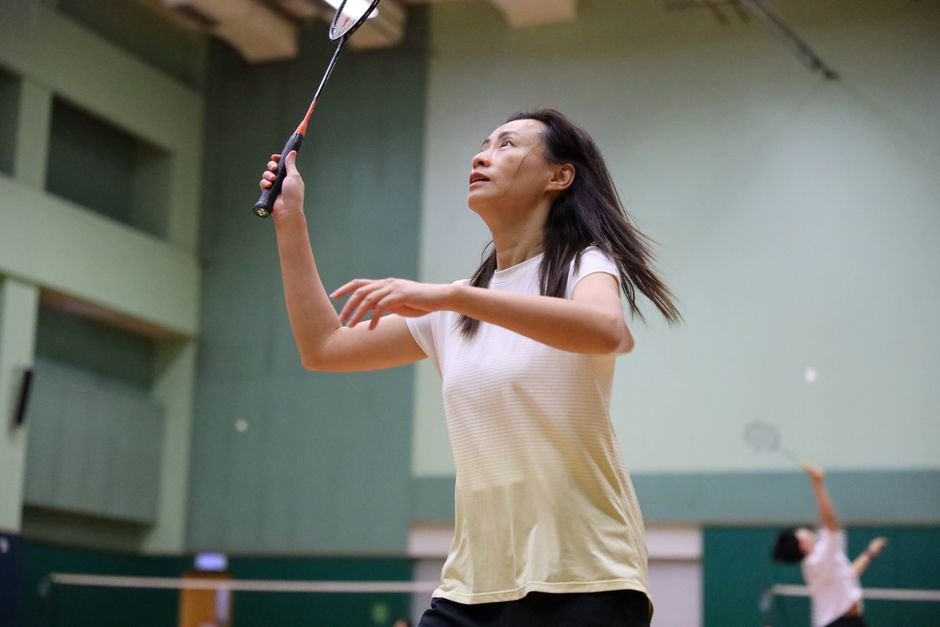
- The Overhead Clear: This is a defensive shot hit high and deep to your opponent’s baseline, giving you time to recover. Focus on a full arm swing, pronation of the forearm, and hitting the shuttle at the highest point of contact. Power comes from your body rotation, not just your arm.
- The Drop Shot: A deceptive shot hit softly from the back court, barely clearing the net and landing just over it. The key is to make it look like a clear or smash until the last moment. Use wrist action and a delicate touch to guide the shuttle.
- The Smash: The most powerful attacking shot, hit downwards with maximum force. It requires excellent timing, a strong overhead action (similar to a tennis serve), and a powerful body rotation. Aim for angles that make it difficult for your opponent to retrieve.
- The Drive: A flat, fast shot hit horizontally across the net, often used in mid-court rallies. Drives can be offensive or defensive, pushing opponents back or creating openings. Focus on a compact, quick swing with strong wrist action.
- The Net Shot (Hairpin Drop): A delicate shot played from close to the net, designed to just clear the net and drop steeply on the opponent’s side. It requires exceptional touch, control, and often a slight cutting or spinning motion to make it harder to lift.
- The Backhand Clear/Drop: Often challenging, these shots require excellent technique, especially for clears. Focus on a strong wrist flick, good body rotation, and hitting the shuttle high and deep for a clear, or with delicate touch for a drop. Many players use a ‘thumb-up’ grip for power on backhand shots.
Actionable Tip: Dedicate practice sessions to one stroke at a time. Hit 20-30 clears, then 20-30 drops, then 20-30 smashes. Focus on consistency and technique before power. Use multi-shuttle drills to get more repetitions.
-
Understand Court Coverage and Positioning
Knowing where to be on the court at any given moment is a critical strategic element. It’s not just about hitting the shuttle, but about hitting it from an advantageous position and then returning to a position that prepares you for the next shot.
- The Base Position: For singles, your base position is typically around the center T-junction, or slightly behind it. This position minimizes the distance you need to travel to reach any part of the court. In doubles, your base position will vary depending on the formation (e.g., front-back or side-by-side).
- Moving to the Shuttle, Returning to Base: After hitting a shot, your immediate priority is to recover to your base position. This cycle of “move-hit-recover” is fundamental. Don’t admire your shot; get ready for the return.
- Anticipation: Develop your ability to read your opponent’s body language, racket angle, and shot trajectory. Anticipating where the shuttle is going allows you to start moving earlier, giving you more time to prepare for your shot.
- Singles vs. Doubles Positioning: In singles, you are responsible for the entire court. Your base position is crucial. In doubles, effective court coverage relies on communication and understanding your partner’s movements. You’ll often rotate between front-court and back-court responsibilities or cover side-by-side areas.
- Exploiting Openings: As you move your opponent around the court, look for openings. If they are slow to recover from a corner, hit the shuttle to the opposite corner. This creates pressure and forces weaker returns.
Actionable Tip: Play half-court games (e.g., only cover one side of the court) to intensely focus on moving to the shuttle and recovering to your specific base position for that game. Then, gradually expand to full court, maintaining that disciplined recovery.
-
Cultivate Strategic Thinking and Shot Selection
Badminton isn’t just about hitting hard; it’s about hitting smart. Top players like Wooi Yik and Aaron excel not just in power but in their ability to outmaneuver opponents strategically. This involves reading the game, varying your shots, and setting up points.
- Reading the Opponent: Pay attention to their strengths and weaknesses. Do they struggle with backhands? Are they slow to the net? Do they prefer attacking or defending? Tailor your shots to exploit these areas. Observe their body language and racket preparation for clues about their intended shot.
- Varying Your Shots: Don’t become predictable. Mix up your clears, drops, smashes, and drives. Change the pace, angle, and height of your shots. A well-placed deceptive shot can be more effective than a powerful but predictable one.
- Setting Up Rallies: Think several shots ahead. A clear might be used to push your opponent back, creating an opening for a drop shot. A drive might force a weak lift, which you can then smash. Each shot should have a purpose within the larger rally strategy.
- Exploiting Weaknesses: Once you identify an opponent’s weakness, consistently target it. If their backhand clear is weak, keep hitting to their backhand corner. If they have poor net defense, play more delicate net shots.
- Understanding Game Flow: Recognize momentum shifts. If you’re on a roll, maintain aggression. If your opponent is gaining momentum, try to break their rhythm with a change of pace or a different type of shot. Sometimes, a simple high clear can reset the rally and give you time to regroup.
Actionable Tip: During practice games, consciously decide on a strategy before each rally (e.g., “I will try to play three clears then a drop”). Reflect after each rally whether your strategy worked and why, or why not.
-
Elevate Your Doubles Play (Inspired by Aaron-Wooi Yik)
Doubles badminton is a completely different beast, requiring seamless teamwork, communication, and specialized strategies. The success of pairs like Aaron Chia and Wooi Yik highlights the importance of synergy.
- Communication is Key: Talk to your partner! Call out “Mine!” for shuttles in the middle, “Yours!” for those near the sideline, or “Leave!” if a shuttle is going out. Non-verbal cues, like a nod or eye contact, also play a vital role.
- Rotation and Formation: Understand when to switch from a side-by-side defensive formation (covering wide shots) to a front-back attacking formation (one player at the net, one covering the back court). After an attacking shot, the hitter usually moves back while the partner moves forward to cover the net.
- Attacking Formations: When you have the advantage (e.g., after a smash or a strong drive), aim to get into a front-back formation. The front player intercepts net returns and blocks, while the back player continues to attack.
- Defensive Formations: When defending against smashes, typically adopt a side-by-side formation. Both players cover their respective halves of the court, ready to lift or drive the shuttle back.
- Net Play in Doubles: The net player is crucial for intercepting weak returns, pushing shuttles down, and setting up smashes for the back player. They need quick reflexes and excellent touch.
- Serving and Receiving Strategies: In doubles, serves are usually low and fast to prevent the opponent from attacking. Receiving serves involves either a push to the net, a drive, or a flick to the back, depending on the server’s position and the desired outcome.
- Covering the Middle: The area between partners is often a target. Discuss who takes what. Generally, the player with the forehand in the middle takes it, or the player who has a better angle to play an attacking shot.
Actionable Tip: Play doubles exclusively for a few sessions, focusing on communication and rotation drills. Consciously call out every shot you intend to take or leave. Record yourselves and analyze your positioning and communication.
-
Integrate Physical and Mental Conditioning
Badminton demands peak physical fitness and unwavering mental fortitude. Neglecting these aspects will limit your potential, regardless of your technical skill.
- Physical Conditioning:
- Stamina (Cardio): High-intensity interval training (HIIT), running, cycling, or skipping rope will improve your endurance for long matches.
- Strength: Focus on core strength (planks, crunches), leg strength (squats, lunges, calf raises for explosive power), and shoulder/arm strength (push-ups, resistance band exercises for smashing and clearing).
- Agility: Ladder drills, cone drills, and shuttle runs are excellent for improving quick changes in direction and acceleration.
- Flexibility: Regular stretching helps prevent injuries and improves range of motion, crucial for reaching difficult shots.
- Mental Conditioning:
- Focus and Concentration: Practice mindfulness and visualization. Before a match, visualize successful shots and movements. During a match, focus only on the current rally, not past mistakes or future outcomes.
- Resilience: Learn to bounce back from errors. Every player makes mistakes; it’s how you react that matters. Don’t let a bad shot affect the next five.
- Handling Pressure: Practice under pressure. Simulate match-like situations in training. Develop pre-shot routines to calm your nerves and center your focus.
- Composure: Maintain a calm demeanor, even when things aren’t going your way. Anger or frustration can cloud judgment and lead to more errors.
Actionable Tip: Create a weekly fitness schedule that complements your badminton training. Dedicate 2-3 sessions to cardio, strength, and agility. For mental toughness, practice a 5-minute meditation daily and use positive self-talk during drills.
- Physical Conditioning:
-
Implement Effective Practice Routines
Consistent, purposeful practice is the engine of improvement. Simply hitting shuttles aimlessly won’t get you far. Structure your sessions to target specific areas for growth.
- Drills (Multi-Shuttle): Work with a coach or partner who can feed you multiple shuttles to specific areas of the court. This allows you to get many repetitions of a particular stroke or footwork pattern without long pauses. Focus on consistency, then speed, then power.
- Specific Stroke Drills: Dedicate time to perfecting one stroke at a time. For example, spend 15 minutes exclusively on overhead clears, focusing on technique and hitting targets.
- Footwork Drills: Practice your movement patterns without a shuttle, then with shadow strokes, and finally with live shuttles. Emphasize quickness, balance, and recovery.
- Sparring/Match Play: Regularly play practice matches against opponents of varying skill levels. This is where you apply your technical skills and strategies in a live, unpredictable environment. Focus on implementing what you’ve learned in drills, rather than just winning.
- Shadow Badminton: Practice your strokes and footwork without a shuttle or partner. This is excellent for muscle memory, visualization, and can be done anywhere.
- Working with a Coach: A good coach can identify your weaknesses, provide personalized feedback, and design drills tailored to your needs. Their experienced eye is invaluable for correcting subtle technical flaws.
Actionable Tip: Plan your practice sessions in advance. For a 90-minute session, allocate 15 mins warm-up, 30 mins drills (e.g., 15 mins footwork, 15 mins specific stroke), 30 mins sparring/game play, 15 mins cool-down/stretching. Be disciplined with your time.
-
Analyze and Adapt Your Game
The journey of improvement is continuous. Great players are always learning, analyzing their own performance, and adapting their strategies to overcome new challenges and opponents.
- Self-Analysis (Video Recordings): Record your matches or practice sessions. Watching yourself play from an objective perspective can reveal flaws in your footwork, grip, stroke technique, or court positioning that you might not notice otherwise. Compare your movements to professional players.
- Opponent Analysis: Before a match, if possible, watch your opponent play. Identify their go-to shots, their weaknesses, and their preferred style. During a match, constantly reassess their performance and adapt your strategy accordingly.
- Adapting Mid-Game: The ability to change your game plan on the fly is a hallmark of a strong player. If your initial strategy isn’t working, don’t stubbornly stick to it. Try different shots, change the pace, or target different areas.
- Post-Match Reflection: After every match, win or lose, take time to reflect. What did you do well? What could you have done better? What specific areas need more practice? Be honest with yourself.
- Continuous Improvement Mindset: Embrace mistakes as learning opportunities. Understand that progress isn’t linear; there will be plateaus and setbacks. Maintain a positive attitude and a hunger to always get better.
Actionable Tip: After your next match, write down three things you did well and three things you want to improve. Then, design a drill or practice focus specifically for one of those improvement areas in your next session.
Tips and Common Mistakes
Even with a structured approach, some general tips can accelerate your progress, while avoiding common pitfalls can save you time and frustration.
Helpful Tips:
- Warm-up and Cool-down: Always start with a dynamic warm-up (light jogging, arm circles, leg swings) and end with static stretches to prevent injuries.
- Hydration and Nutrition: Fuel your body properly before, during, and after play. Water is crucial.
- Watch Professionals: Observe top players like Wooi Yik and Aaron Chia. Analyze their footwork, shot selection, and court coverage. You’ll pick up nuances you might not learn elsewhere.
- Get Coaching: A certified coach can provide personalized feedback and accelerate your learning curve significantly.
- Be Patient: Mastery takes time. Celebrate small victories and don’t get discouraged by slow progress.
- Enjoy the Game: Ultimately, badminton should be fun. Keep a positive attitude and cherish the process of improvement.
Common Mistakes to Avoid:
- Improper Grip: Gripping too tightly or not changing grips quickly enough severely limits your shot options and power.
- Poor Footwork: Standing flat-footed, not using the split step, or failing to recover to base position will leave you constantly chasing the shuttle.
- Hitting from the Back Foot: Always aim to hit the shuttle in front of your body, ideally at the highest point, for maximum power and control.
- Neglecting the Net Game: A strong net game is crucial for setting up attacks and winning points. Don’t just lift everything.
- Lack of Communication (Doubles): Silence on the court leads to confusion, missed shuttles, and frustration.
- Not Varying Shots: Becoming predictable makes it easy for your opponent to anticipate and counter your shots.
- Giving Up Easily: Mental fortitude is as important as physical skill. Don’t let a few lost points or a strong opponent break your spirit.
Final Thoughts
Improving your badminton game is a journey, not a destination. By systematically working through your grip, footwork, strokes, and strategy, you’ll build a strong foundation. Drawing inspiration from the dedication and skill of champions like Wooi Yik and Aaron Chia, remember that consistent effort, smart practice, and a passion for the game are your most powerful tools.
Embrace every challenge as an opportunity to learn, stay persistent, and most importantly, have fun on the court. You’ll be amazed at how far you can go when you combine technique with tenacity. Good luck, and happy smashing!
Frequently Asked Questions
What essential equipment should a beginner prioritize when starting badminton?
For beginners, prioritizing a comfortable racket that suits your hand, a mix of nylon and feather shuttlecocks for practice and match play, and badminton-specific shoes for crucial grip and ankle support is key. Additionally, light athletic apparel, access to a court, and staying hydrated are important for a good start.
Why is mastering grip and stance considered fundamental for improving one's badminton game?
Mastering your grip and stance is foundational because your grip dictates the power, control, and deception you can apply to every shot, directly impacting shot quality. Your stance, on the other hand, determines your readiness and ability to react swiftly to the shuttlecock, positioning you effectively for subsequent plays. Without these basics, advanced techniques become much harder to execute.
Beyond equipment and basic technique, what else is crucial for significant improvement in badminton?
Beyond the right gear, dedication and patience are paramount, as improvement in badminton is a continuous process requiring consistent effort and a willingness to learn from every experience. Having a practice partner or coach is invaluable for drills, sparring, and receiving constructive feedback, which helps refine technique and strategy. Staying hydrated during this high-intensity sport also supports sustained performance.
Author

96livemarketing@gmail.com
Related Posts

Vietnamese coffee farmers ride China’s durian wave – The Star
- 0
- 2,462 words
⏱11 min readOn this pageWhat You’ll NeedSteps1. Assess Your Farm’s Suitability for Durian Cultivation2. Conduct Thorough Market Research and Variety Selection3. Source...
Read out all
Youth and Sports Minister calls for thorough probe into Nur Qaira Alisha’s death – The Star
- 0
- 2,554 words
⏱11 min readOn this pageWhat You’ll NeedSteps1. Understand the Landscape of Risks in Youth Sports2. Diligently Choose Safe Programs and Organizations3. Establish...
Read out all
Guns, drugs and car chases: GTA 6 preview lands on Netflix after leaks – Malay Mail
- 0
- 2,926 words
⏱13 min readOn this pageWhat you’ll needSteps1. Understand the Hype and Official Information2. Revisit the Grand Theft Auto Legacy3. Decipher What We...
Read out all
Near-Total Lunar Eclipse Will Turn Moon Blood Red – The New York Times
- 0
- 309 words
⏱1 min read How to Witness the Near-Total Lunar Eclipse body { font-family: ‘Segoe UI’, Tahoma, Geneva, Verdana, sans-serif; line-height: 1.6; color:...
Read out allCecilia Cheung Posted 58 Instagram Stories In One Day — Is That Oversharing? Or “Is She Lonely”, Ask Netizens – 8days.sg
- 0
- 2,313 words
⏱10 min readOn this pageWhat You’ll NeedSteps1. Understand Your “Why” Behind Every Post2. Define and Understand Your Intended Audience3. Establish Your Personal...
Read out all
Partial lunar eclipse Aug. 27-28 live updates: 3 days to go, here’s what you need to know – Space
- 0
- 3,357 words
⏱15 min readOn this pageWhat You’ll NeedSteps1. Confirm the Eclipse Details for Your Location (3 Days Out)2. Check the Weather Forecast (2-3...
Read out all